
Why does my dog growl at your husband? Your dog might growl at your husband for simple reasons like fear, protecting you or things it values, feeling territorial, feeling worried, or even just not feeling well. Growling is how a dog tells you it feels uneasy or scared about something. It’s a warning sign. It means the dog wants the person or thing to stop. This behavior, sometimes seen as dog aggression towards husband, needs attention. It’s a sign your dog isn’t comfortable.
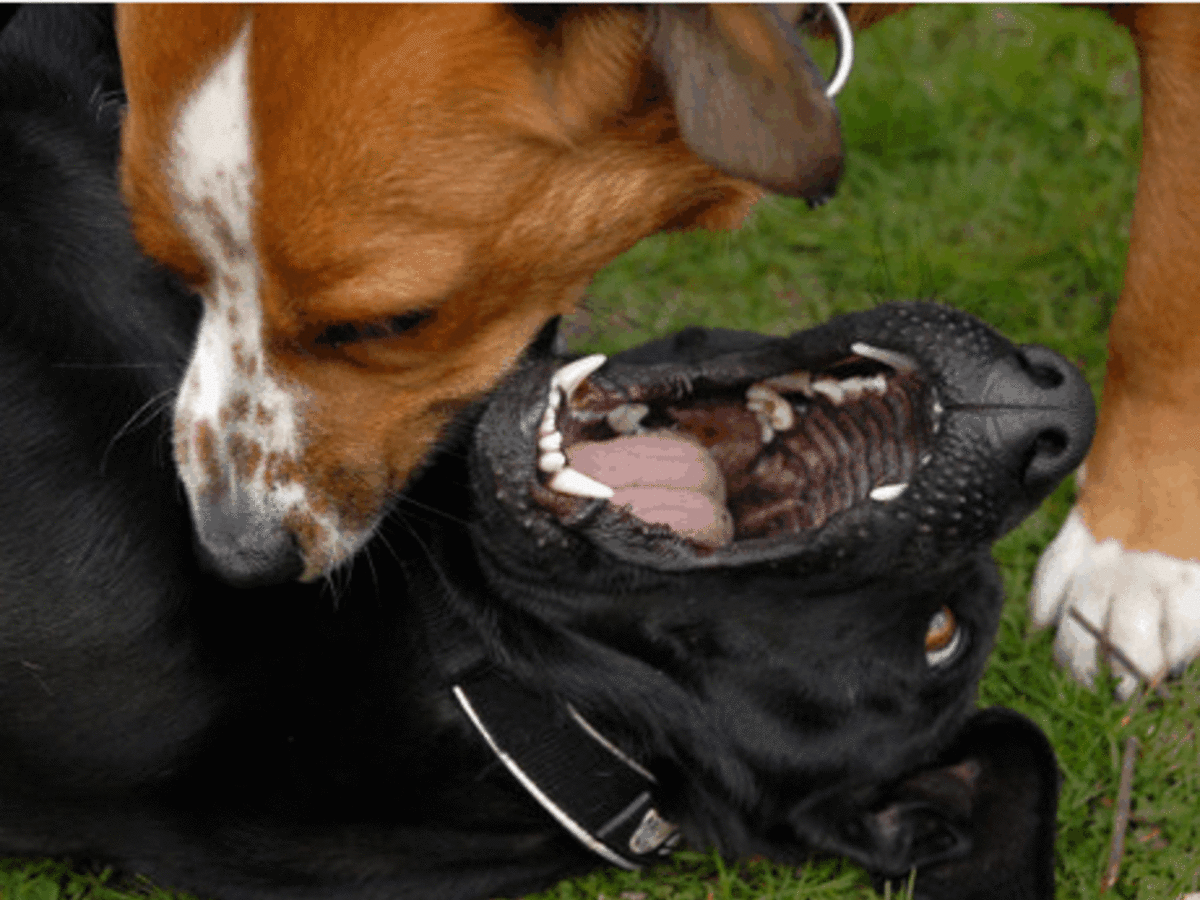
Image Source: images.saymedia-content.com
Figuring Out Why Your Dog Growls at Your Husband
Dogs growl for many reasons. It is how they talk to us. A growl often means “Please stop,” or “I feel scared,” or “Stay away.” When a dog growls at your spouse, it is telling you something important. Ignoring the growl is not a good idea. It can make the problem worse. The dog might feel it has to do more than growl next time. We need to find out why the dog is growling. Only then can we help the dog feel better.
There are many reasons for dog growling at spouse behavior. Let’s look at some common ones.
Seeing Fear in Your Dog’s Actions
One big reason a dog might growl at your husband is fear. Some dogs are afraid of men. This could be because of bad past experiences. Maybe they were treated badly by a man. Or maybe they did not spend much time around men when they were young. This lack of time with men is called poor socialization.
Signs of dog fear of husband can be:
- Body shaking
- Putting the tail between the legs
- Trying to run away
- Yawning a lot when not tired
- Licking lips when no food is there
- Avoiding looking at your husband
- Freezing still
- Growling when your husband comes near or tries to touch them
If your dog shows these signs with the growling, fear is likely the cause. Your husband’s size, voice, or even smell might scare the dog. Quick moves or loud sounds can also make a fearful dog growl. They are saying, “I’m scared, please stay away!” This is a type of anxious dog behavior around husband.
Protecting Things Your Dog Cares About
Dogs can protect things they value. This is called resource guarding. The “resource” can be food, toys, a favorite sleeping spot, or even a person. If your dog growls at your husband when he comes near you, the dog might see you as a resource. This is sometimes called dog protective of owner around husband. The dog thinks your husband is a threat to its bond with you.
Other signs of resource guarding dog husband may include growling when your husband comes near:
- The dog’s food bowl while eating
- A favorite toy the dog is playing with
- The dog’s bed
- You, especially when you are sitting together
The dog is trying to keep your husband away from something important to it. The growl says, “This is mine, don’t come closer!”
Claiming Space: Territorial Growling
Dogs are animals that can protect their space. This is territorial behavior. A dog might growl at your husband if the dog feels your husband is an outsider entering “its” area. This area could be the home, a specific room, or even just the sofa.
This type of territorial dog growling husband happens when your husband:
- Enters a room where the dog is resting
- Walks by the dog’s bed or crate
- Comes through the front door (though this is less likely with a family member)
- Sits in a spot the dog sees as its own
The dog is trying to tell your husband, “This is my spot, stay out!” It’s about defending a piece of ground or a space.
Feeling Anxious and Worried
Some dogs are just naturally more worried or anxious than others. They might get stressed by changes or new things. Your husband’s actions, even small ones, might make an anxious dog feel uneasy. This anxious dog behavior around husband can show up as growling.
Signs of a generally anxious dog include:
- Being jumpy or easily scared
- Following you everywhere
- Shaking or panting when nothing is wrong
- Having accidents in the house
- Chewing things up when left alone
If your dog is often anxious, the growling at your husband could be part of this. It’s a way of saying, “I feel unsafe and worried right now.”
Pain or Not Feeling Well
Sometimes, aggression or growling is a sign a dog is in pain. If your dog suddenly starts growling at your husband, and this is new behavior, pain could be the reason. Your husband might have touched a sore spot without knowing.
If your dog growls when your husband tries to pet them, lift them, or touch a certain part of their body, think about pain. A vet visit is important if you think this might be the case. A dog in pain might become irritable and growl to prevent being touched. This is a common cause of sudden changes in dog behavior.
Past Life and Socialization
A dog’s past life plays a big role in how they act. Dogs that did not meet many different people, places, and things when they were young puppies (before 16 weeks old) might be fearful later on. This includes not meeting different types of people, like men, women, children, and people with hats or beards.
If your dog did not have good experiences or enough experiences with men early in life, they might show dog aggression towards men later. This is not the dog being mean. It is the dog not knowing how to act or feeling unsafe. The growling is a way to cope with this feeling.
What the Growl Really Means
It’s key to remember what a growl is. It is a warning. It is not the dog being “bad.” The dog is giving a clear signal that it is not okay with something happening. Think of it like a stop sign. If you see a stop sign, you stop. If you ignore it, there could be a crash. If you ignore a dog’s growl, the dog might feel it needs a louder warning. This could be snapping or biting.
So, when your dog growls at your husband, listen to the growl. It’s the first step in solving the problem.
Steps to Take When Your Dog Growls
When your dog growls at your husband, stop what is happening. Do not get mad at the dog. Do not punish the growl. Punishing the growl takes away the warning sign. The dog might then go straight to biting with no growl first.
Instead, create space between the dog and your husband. Let the dog move away if it wants to. Do not force the dog to be near your husband. This immediate step helps the dog feel safer. It also prevents the situation from getting worse right then.
After things are calm, you need a plan. How to stop dog growling at husband requires time and the right steps.
Getting Help from a Pro
Dealing with dog aggression towards husband can be hard. Sometimes, you need help from someone who knows a lot about dog behavior. This is where a dog behaviorist help husband dog comes in. A certified applied animal behaviorist (CAAB) or a certified professional dog trainer (CPDT-KA/KSA) who works with behavior problems can help.
They can watch your dog and figure out exactly why the growling is happening. They can create a safe plan to change the dog’s feelings and actions towards your husband. Look for a behaviorist or trainer who uses positive reinforcement methods. They focus on rewarding good behavior and helping the dog feel safe, not on punishment.
Changing the Dog’s Feelings (Desensitization and Counter-Conditioning)
A main way to help is to change how the dog feels about your husband. This involves two parts:
- Desensitization: Making the dog less sensitive to the thing that scares it (your husband). This means showing the dog your husband in a way that does not cause the dog to growl. Start far away, where the dog sees your husband but does not feel scared.
- Counter-Conditioning: Changing the dog’s feeling from bad (fear, worry) to good (happy, safe). This means good things happen when your husband is around.
This sounds simple, but it takes patience. It needs to be done slowly.
Step-by-Step: Making Your Husband Less Scary
Here is a simple idea of how this works. You need high-value treats your dog loves (like small pieces of chicken or cheese).
- Your husband sits far away from the dog. So far away that the dog does not even look at him or feel worried.
- You give the dog a super yummy treat. Husband is far away = good treat.
- Husband quietly gets up and leaves. No more treat.
- Repeat this many times. Your dog starts to think: “When husband is far away, I get yummy treats! Husband being there is good!”
- Slowly, over days or weeks, your husband can move a little closer. Only move closer if the dog stays relaxed. If the dog shows any sign of worry (stiff body, staring, lip lick, growl), husband is too close. Move back to where the dog was relaxed.
- Continue this process, linking your husband’s presence with great things (treats, praise).
This method helps change the dog’s feeling about your husband from negative to positive. It takes time and many, many repeats. It must be done without the dog feeling stressed or growling. If the dog growls, you went too fast.
Building a New Relationship Between Dog and Husband
Your husband needs to build trust with the dog. He should become the source of good things for the dog.
- Feeding Time: Have your husband feed the dog its meals. He can even hand-feed part of the meal. This connects him with something the dog needs and loves.
- Treats Only From Him: For a while, only your husband gives the dog special treats. When he walks by, he can drop a treat. When he sits down, he can toss a treat. This builds a positive link.
- Playing Together: Find a game the dog enjoys. Maybe fetch or a puzzle toy. Your husband can play this game with the dog. Start with games where the dog is not right next to him, like fetch. Playing helps build a fun bond.
- Training Together: Have your husband do simple, fun training with the dog. Ask for a “sit” or “paw.” When the dog does it, your husband gives the reward. This builds a good working relationship.
The goal is for the dog to see your husband as a provider of good things, not a threat.
Setting Rules and Being Predictable
Dogs feel safer when they know what to expect. Having clear rules for the dog can lower anxiety.
- Decide where the dog is allowed and not allowed.
- Teach the dog a “place” command so it can go to a safe spot (like a mat or bed) when asked. This is helpful when your husband is around.
- Make interactions with your husband predictable. For example, maybe your husband always gives a treat when he comes home.
Predictability helps reduce anxious dog behavior around husband.
Managing the Environment
Sometimes, you need to manage the situation to prevent the growling. This keeps everyone safe and prevents the dog from practicing the unwanted behavior.
- Physical Barriers: Use baby gates or put the dog in a different room or crate when your husband is doing things that usually cause the dog to growl (like sitting next to you on the sofa).
- Leash: Keep the dog on a leash when your husband is around, so you can gently guide the dog away if it starts to get stressed. Never use the leash to pull the dog closer to your husband.
- Safe Space: Make sure the dog has a safe spot it can go to that your husband does not bother it in (like a crate with a comfy bed).
Management is not a cure, but it is a very important part of the plan while you work on changing the behavior. It prevents the problem from happening and keeps everyone safe.
Specific Scenarios and Solutions
Let’s look at some common times dog growling at spouse happens and what you can do.
H5 Growling When Husband Sits Next to You
This often falls under resource guarding you or being protective of you.
- Management: Do not let the dog sit right next to you when your husband is there, especially at first. Have the dog lay on its bed or mat away from the sofa. Use the “place” command.
- Training: Work on the desensitization and counter-conditioning mentioned above. Your husband gives great treats when he is near you but not touching you. Slowly decrease the distance over time.
- Change the Association: When your husband sits near you, make something good happen for the dog. Maybe he tosses a treat to the dog’s bed, or gives the dog a special chew toy it only gets at this time.
- Husband Becomes Source of Good: When your husband sits down, he gives the dog a treat or toy, not you.
H5 Growling When Husband Comes Home
This could be territorial, fear-based, or even overly excited behavior that turns into frustration.
- Management: Put the dog on a leash or behind a gate before your husband comes in.
- Training: Have your husband come in quietly. He should ignore the dog at first. No petting or talking until the dog is calm. This prevents rewarding the excited or anxious state.
- Counter-Conditioning: Your husband coming home means good things. He could drop a few high-value treats as he enters, or give the dog a special toy. The dog learns to look forward to him arriving.
- Practice Arrivals: If possible, practice the arrival. Husband leaves for a minute, comes back in quietly, drops treats, leaves. Repeat many times, slowly increasing the time he is gone.
H5 Growling During Petting or Interaction
This could be pain, fear of touch, or past bad experiences.
- Vet Check: Rule out pain first! This is very important if the growling started suddenly.
- Slow and Gentle: Your husband should approach the dog slowly. Offer the back of his hand for the dog to sniff, but don’t force interaction.
- Consent Tests: Teach the dog that it has a choice. Your husband pets the dog for 3 seconds, then stops. Does the dog lean in for more? Then pet again. Does the dog move away or look away? Then stop petting. This gives the dog control and builds trust.
- Pair Touch with Treats: Your husband touches the dog gently for just a second, then immediately gives a super yummy treat. Repeat, slowly adding more touch if the dog is okay. Only touch spots the dog likes (often the chest or shoulders, not the head).
- Avoid Triggers: Do not let your husband touch the dog in ways or places that cause growling.
Why Punishment Does Not Work
It is important to understand why punishing a growl is harmful.
- Hiding the Problem: As mentioned, it stops the warning. The dog still feels scared, territorial, or protective. It just learns not to tell you about it with a growl. This is like removing the smoke alarm when there is a fire.
- Making Fear Worse: If the growl is from fear, punishing it makes the dog even more afraid of the situation and the person doing the punishing (your husband). This can make the aggression worse over time.
- Damaging Trust: Punishment hurts the bond between your husband and the dog. The dog learns that your husband is sometimes scary or unpredictable, not a source of safety or good things.
- Lack of Clarity: The dog does not understand why it is being punished. It only knows that it felt stressed or scared and then something bad happened.
Focus on positive ways to change behavior. Reward the absence of growling. Reward calm behavior. Reward the dog choosing to be near your husband.
Factors That Influence Dog Aggression Towards Men (or Specific Men)
Several things can make a dog more likely to show aggression towards men. These are often the causes, but looking at them this way helps understand the bigger picture.
- Genetics: Some dog breeds or lines might be more prone to guarding or fearful behaviors.
- Lack of Socialization: Not meeting enough different people (especially men) and having good experiences with them when very young.
- Bad Experiences: Being treated roughly or hurt by a man in the past.
- Learned Behavior: If growling worked to make a man go away in the past, the dog learned it’s a good strategy.
- Owner’s Behavior: If you act nervous when your husband is around the dog, you can make the dog feel nervous too. Your stress can become the dog’s stress.
- Husband’s Behavior: Loud voice, fast movements, staring directly at the dog, trying to hug or force interaction can all be scary for a dog.
- Health Issues: As discussed, pain or medical problems can lower a dog’s tolerance and make them more likely to growl.
Understanding these causes of dog aggression towards men helps create the right plan.
Creating a Safety Plan
While you are working on changing the behavior, have a safety plan in place.
- Know what your dog’s warning signs are (stiff body, whale eye, lip lick, freeze, growl). Stop interaction before the growl if possible.
- Do not leave the dog and your husband alone together unsupervised until the behavior is much better.
- Use gates, leashes, or separate rooms to prevent problems.
- Inform visitors (if this happens with other men too) about the dog’s needs and behavior.
- Make sure your husband understands the plan and is on board with using positive methods.
Safety is the top priority while you work on the issue.
The Importance of Patience
Changing a dog’s feelings and behavior takes time. There is no quick fix. It might take weeks, months, or even longer. Be patient with your dog and with your husband. Celebrate small wins. If the dog could be in the same room as your husband without growling for five minutes, that is progress!
Do not get discouraged if there are setbacks. Behavior change is not a straight line. If the growling happens, it just means you went too fast or need to go back a step in the training plan.
When is it Serious?
Any dog aggression towards husband is serious because it involves growling and the risk of it getting worse. However, some situations need a behaviorist right away.
- If the growling is intense or includes snapping or biting.
- If the dog seems very fearful or anxious most of the time.
- If the behavior has appeared suddenly and you can’t figure out why.
- If you feel unsafe managing the situation.
- If the growling is getting worse instead of better with your efforts.
A behaviorist can help you understand the level of risk and create a proper safety and behavior change plan. Trying to fix serious aggression problems on your own can be dangerous.
Table: Common Reasons for Growling & What it Might Look Like
| Possible Reason | How the Growl Might Sound/Look Like | Other Body Language Signs | What to Do First |
|---|---|---|---|
| Fear | Lower growl, sometimes quiet. Dog might back away. | Tail tucked, body low, avoiding eye contact, shaking, lip licking | Create distance, don’t force interaction, get treats |
| Resource Guarding (You) | Often happens when husband gets near you while dog is by you. | Stiff body, hard stare at husband, might put head on your lap | Manage space, husband gives treats when near you |
| Resource Guarding (Item) | Happens when husband gets near food, toys, bed. | Stiff body over item, hard stare at husband. | Don’t let husband approach dog’s valued items |
| Territorial | Often happens when husband enters dog’s “space” (doorway, room). | Dog might move towards husband, body stiff, sometimes barking | Manage space, husband gives treats when entering |
| Anxiety | Can happen in many situations. May be part of general anxious signs. | Pacing, panting, wide eyes, inability to settle. | Manage triggers, build confidence, professional help |
| Pain/Illness | Sudden onset of growling, especially with touch. | Avoiding touch, limping, whining, sensitive to being handled. | See a veterinarian right away! |
This table gives a quick look at the different reasons. Remember, a dog might show signs from more than one group.
Living With a Dog That Growls at Your Husband
This situation can be stressful for everyone in the home. It affects your relationship with your dog and your husband. It is important for both you and your husband to be on the same page. You both need to work together on the plan.
Your husband might feel hurt or rejected by the dog’s behavior. This is natural. Help him understand that it’s not personal. The dog is reacting out of fear, discomfort, or a lack of understanding, not malice. Focusing on building a positive relationship through training and good experiences is key for him.
Your role is to support both your husband and your dog. You are the bridge. You manage the environment, guide the interactions, and make sure everyone is safe and the training plan is followed.
Long-Term Outlook
Can a dog stop growling at a husband? Yes, in many cases, the behavior can get much better or even stop. It depends on the reason for the growling, how long it has been happening, how serious it is, and how consistently everyone works on the plan.
The goal is to help the dog feel safe and happy around your husband. It is about changing the dog’s emotional response. With patience, positive training, and maybe help from a professional dog behaviorist, you can improve the situation greatly. In some complex cases, managing the behavior might be needed long-term, but the frequency and intensity of the growling can usually be reduced.
Wrapping Up: Solving Why Does My Dog Growl At My Husband
Finding out why your dog growls at your husband is the first step to fixing it. Is it fear (dog fear of husband)? Is it protecting you or something else (resource guarding dog husband, dog protective of owner around husband)? Is it about space (territorial dog growling husband)? Is it general worry (anxious dog behavior around husband)? Or is the dog in pain?
Once you have an idea of the cause (or causes), you can start working on it. Do not punish the growl. Instead, manage the situations that cause the growl and start positive training. Help your husband build a good relationship with the dog. Use treats and fun activities. If the problem is serious or you are not sure what to do, get help from a certified dog behaviorist.
Solving dog aggression towards husband takes time and effort. But helping your dog feel safe and building a good relationship between your dog and your husband is worth it.
Frequently Asked Questions (FAQ)
H4 Is it normal for a dog to growl at one person in the family?
It can happen. Dogs have different relationships with different people. They might feel scared of, protective of, or territorial towards one person more than others. Often, this person is a man, due to size, voice, or past experiences.
H4 Does growling mean my dog will bite my husband?
Growling is a warning. It means the dog is stressed and might bite if the warning is ignored or if the dog feels trapped or pushed too far. It does not mean a bite is certain, but it means there is a risk, and the situation needs to be handled carefully to prevent one.
H4 Should my husband try to force the dog to like him?
No, forcing interaction usually makes fear and growling worse. The dog needs to feel safe and in control. Building trust happens when your husband gives the dog good things and respects the dog’s need for space.
H4 How long does it take to stop a dog from growling at my husband?
It is different for every dog and situation. It depends on the cause, how long it has been happening, the dog’s past, and how often you work on the plan. It can take weeks to see small changes and months to see big changes. Be patient and consistent.
H4 Can I fix this without a professional?
For mild cases of growling (low stress, no history of snapping), you might make progress with good resources and careful work using positive methods. But for moderate to severe growling, or any growling with snapping or biting, getting dog behaviorist help husband dog is highly recommended for safety and the best chance of success.
H4 My dog only growls when my husband sits near me. What does that mean?
This is a common sign of resource guarding you. The dog sees you as a valuable resource and wants to keep your husband away from you. It can also be related to feeling protective of you. Manage space and have your husband be the source of treats and good things when he is near you.
H4 My dog is fine with other men, just not my husband. Why?
There might be something specific about your husband that triggers the dog. This could be his smell, his voice, his movements, how he interacts with you, or even a past, perhaps unknown, negative event between them. A behaviorist can help figure out these specific triggers.