
Yes, you can train your own service dog for POTS. Training a service dog to help with Postural Orthostatic Tachycardia Syndrome (POTS) is a big but rewarding journey. A well-trained service dog can make a huge difference for someone living with POTS. These special dogs perform specific POTS service dog tasks like alerting to changes in your body, fetching things, and providing support. This guide will show you how to train your own Dysautonomia assistance dog to help manage your symptoms and improve your daily life.
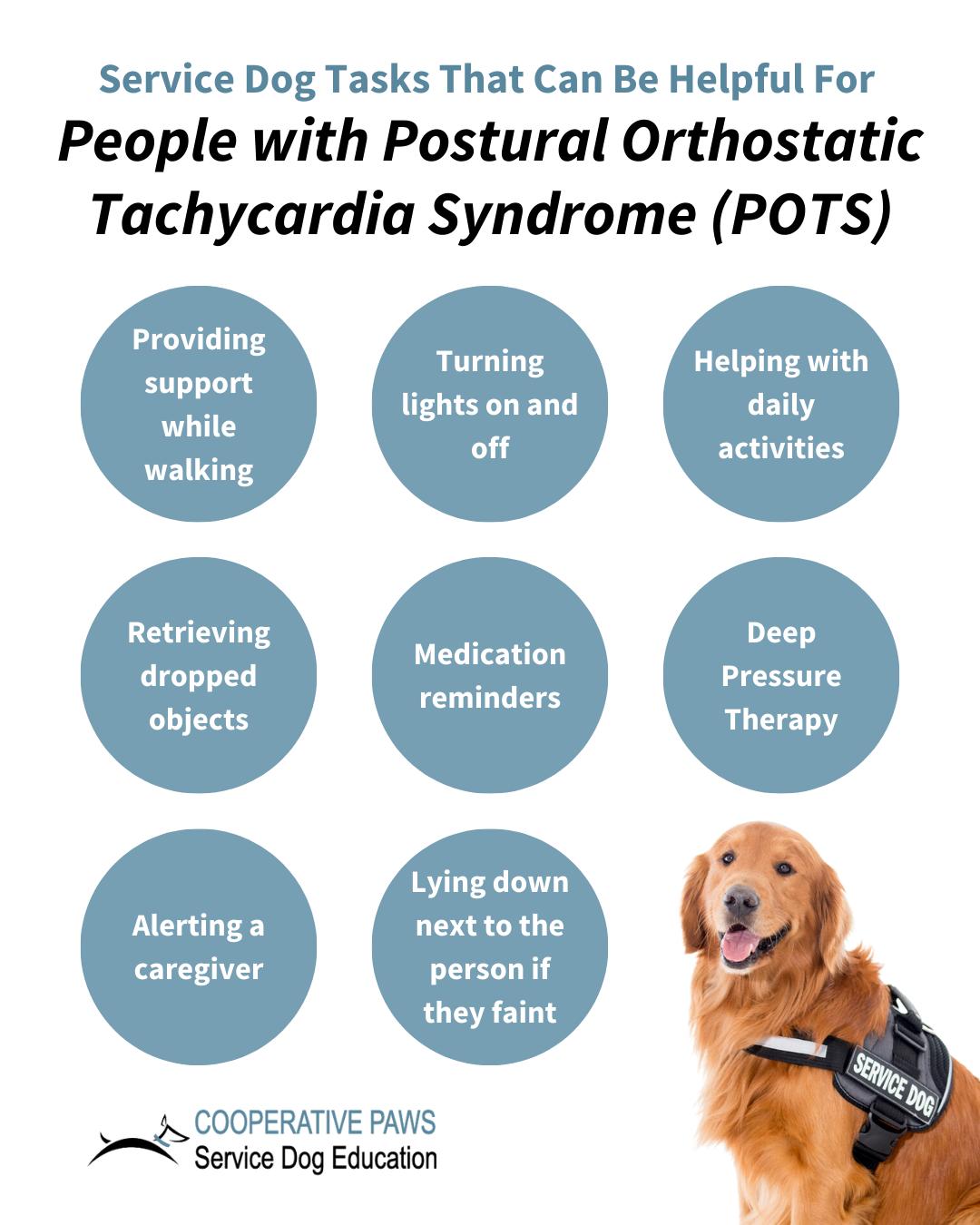
Image Source: cooperativepaws.com
Navigating Life with Postural Orthostatic Tachycardia Syndrome (POTS)
POTS is a type of dysautonomia. This means it is a problem with the autonomic nervous system. This system controls many body functions we do not think about. These include heart rate, blood pressure, digestion, and body temperature. For people with POTS, their heart rate jumps up a lot when they stand up. This happens even without a drop in blood pressure. Or, the drop in blood pressure is not enough to be called orthostatic hypotension.
Symptoms of POTS can be severe. They can include dizziness, fainting, brain fog, fatigue, chest pains, and stomach issues. These symptoms can make daily life very hard. Simple tasks, like standing up or walking, can cause dizziness or even lead to passing out. This is where a service dog can be a true lifeline. A service dog offers more than just comfort. They provide practical help that can lower risks and raise your quality of life. An Autonomic neuropathy service dog can learn to do many helpful jobs.
Why a Service Dog for Chronic Illness?
Living with a chronic illness like POTS means facing many challenges every day. A service animal can give a sense of safety and freedom. They can help with physical tasks. They also offer a constant, calming presence. For someone with POTS, a service dog can be a Medical alert dog for syncope. This means they can warn you before you faint. This gives you time to sit or lie down safely. This can prevent injuries from falls. The help a service dog provides is beyond what human caregivers can do 24/7. They are always there. They are trained to respond to your specific needs. This makes them a key part of managing your health.
The Role of a Service Dog
A service dog is not just a pet. It is a working animal. They must be trained to do specific tasks for a person with a disability. These tasks must directly help with the person’s disability. For POTS, this means tasks that address symptoms like dizziness, fainting, and weakness. A well-trained service dog helps manage symptoms. They also help keep you safe. They give you more independence.
| Key Benefits of a POTS Service Dog | Description |
|---|---|