
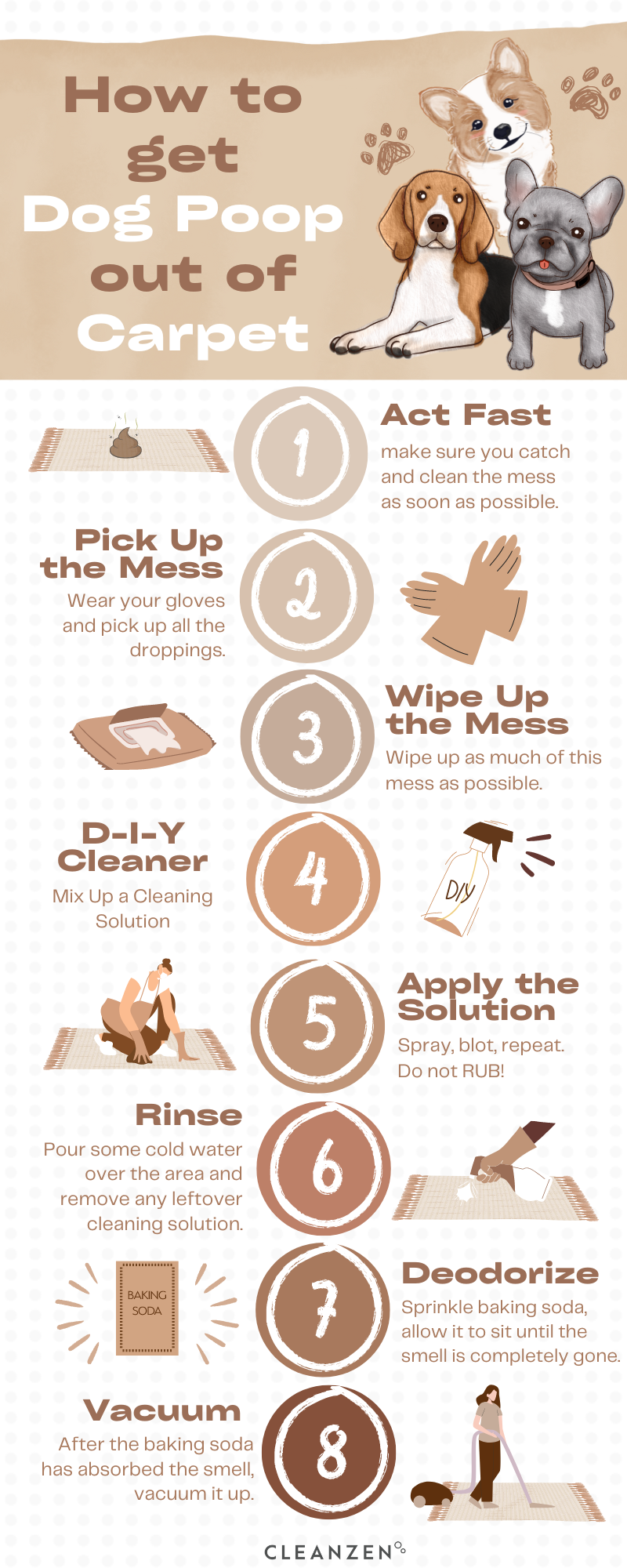
Image Source: cleanzen.com
Eliminate Odor: How To Remove The Smell Of Dog Poop From Carpet
Let’s face it, finding dog poop on your carpet is not fun. It’s a messy problem that leaves behind an unpleasant stain and a lingering smell. So, how do you get dog poop smell out of carpet? The best way involves quick action to remove the solid waste, thorough cleaning to tackle the stain, and using specific products designed to break down the odor-causing molecules. This multi-step approach ensures you eliminate both the visual mess and the hidden smell.
Dealing with dog poop on the carpet can feel overwhelming. The stain is bad enough, but the smell can stick around for a long time if you don’t clean it right. This smell comes from bacteria in the poop. These bacteria break down the waste and let off gases. Those gases are what you smell. When poop gets into carpet fibers, the bacteria and odor molecules hide deep down. Standard cleaning often only gets the surface. To truly get rid of the smell, you need to clean deep and use something that attacks the odor at its source. We will walk you through the best ways to make your carpet fresh again. We will cover quick fixes and more powerful cleaning methods. This includes using special cleaners and simple things you might already have at home.
Interpreting the Need for Speed
When your dog has an accident on the carpet, time is very important. The faster you act, the better your chances are of fully removing the mess, the stain, and the smell. Fresh poop is easier to clean up than dried poop. The moisture in fresh poop keeps the odor molecules and stain-causing stuff on the surface. This means you can blot it up more easily.
As time passes, the moisture starts to dry up. The poop’s parts soak deeper into the carpet fibers and padding. This makes the stain harder to lift. It also allows the odor molecules to bind more tightly to the carpet materials. The bacteria in the poop also start to grow, especially if the area is warm and damp. More bacteria mean more odor.
Acting fast helps you:
- Stop the stain from setting deep down.
- Prevent the odor from soaking into the carpet pad and subfloor.
- Make the cleaning job much easier and more effective.
- Reduce the spread of bacteria in your home.
So, as soon as you see the mess, stop what you are doing and get ready to clean. A few minutes of quick action can save you hours of cleaning later. It can also save your carpet from a permanent stain and smell. Don’t wait. Grab your cleaning supplies right away.
Grasping the Removal Process: Getting Rid of the Solids
The first step in cleaning dog poop from carpet is getting the solid stuff off the carpet without pushing it deeper in. This is messy work, but doing it carefully makes everything else easier. You need to be gentle but thorough.
Gathering Your Tools
Before you touch anything, get what you need ready. This prevents you from having to run around the house while the mess sits there.
Here is a list of tools you should have:
- Disposable gloves: Protect your hands. Poop has lots of bacteria.
- Paper towels or old rags: You will need a lot. Choose ones you can throw away or wash separately later.
- Plastic bags: For putting the poop and used paper towels in. Tie the bag shut well.
- A flat tool: Like a plastic spatula, a piece of cardboard, or a stiff piece of paper. This helps lift the solid waste without smearing it. Don’t use anything sharp that could damage the carpet.
- Cleaning solution (ready to go): Have your chosen cleaner (which we will talk about soon) mixed and in a spray bottle.
Having these items ready lets you start cleaning right away. You won’t waste time looking for supplies. This speed, as we talked about, is very important.
Carefully Lifting the Mess
Now it’s time to remove the poop itself. This is the part no one likes, but it has to be done right.
Follow these steps:
- Put on your gloves. Always protect your hands.
- Use your flat tool. Gently scrape under the edges of the poop. Try to lift the mass up off the carpet fibers.
- Work from the outside in. This helps keep the mess from spreading outwards.
- Place the lifted poop onto several layers of paper towels or rags. Hold the paper towels ready as you lift the poop.
- Repeat. Keep gently scraping and lifting until you get up as much solid material as possible.
- Be patient. Don’t try to get it all in one go. Take your time to lift the poop carefully.
- Avoid pushing down. Don’t press the poop into the carpet as you scrape. Lift it straight up.
- Use fresh paper towels for each bit you lift if the mess is large.
The goal here is to remove the bulk of the poop. Don’t worry about the stain or the stuff stuck deep in the fibers yet. You just want to get the big mess off the surface.
Disposing of the Poop
Once you have lifted the solid waste onto paper towels or rags, you need to get rid of it safely and quickly.
- Gather the paper towels/rags with the poop.
- Put them into a plastic bag.
- If there’s a lot of poop, double bag it. This stops smells and prevents leaks.
- Tie the bag shut tightly. Get all the air out before tying if possible.
- Take the bag outside to your trash can right away. Do not leave it inside your house. The smell will spread fast.
- Wash your hands thoroughly with soap and water, even though you wore gloves.
Removing the solid part is the first big step. It sets the stage for cleaning the stain and getting rid of the smell. Doing this step carefully is key to a better final result.
Deciphering Stain Removal: Cleaning the Leftover Mark
After you remove the solid poop, you will see the stain left behind. Dog poop stain removal carpet is the next step. This stain needs to be cleaned gently but effectively to avoid damaging the carpet.
Why Stains Happen
Dog poop contains different things that cause stains.
- Digested food: This can include fats, proteins, and colored plant matter.
- Bile: A digestive fluid that can have a yellow or brown color.
- Bacteria: As they break down waste, they can also leave colored residues.
These substances soak into the carpet fibers. The fibers themselves can trap the colored parts. If you don’t clean them out quickly and properly, they bond to the fiber material. This makes the stain set in.
Blotting, Not Rubbing
This is one of the most important rules for cleaning any carpet stain, especially dog poop.
- Blotting: Means pressing down on the stain with a cloth or paper towel to soak up liquid. You lift the material straight up.
- Rubbing: Means scrubbing the stain back and forth or in circles.
Why you should only blot:
- Rubbing spreads the stain: It pushes the stained liquid outwards, making the dirty area bigger.
- Rubbing pushes the stain deeper: It forces the poop particles and liquids down into the carpet fibers and padding. This makes it much harder to get out later.
- Rubbing can damage the carpet: It can mess up the carpet fibers, making the spot look fuzzy or worn even after the stain is gone.
Always use a clean white cloth or thick paper towels. Start blotting from the outside edge of the stain and work your way towards the center. This helps keep the stain from spreading. Change to a clean part of the cloth or new paper towels often. Keep blotting until you are no longer picking up any color or moisture from the carpet.
Rinsing the Area
After blotting up as much of the initial liquid as possible, you need to rinse the area. This helps lift more of the stain-causing stuff and any remaining small bits of poop from the fibers.
Use clean, cool water.
- Get a clean spray bottle.
- Fill it with cool water. Do not use hot water. Hot water can set protein stains like poop.
- Lightly spray the stained area. Don’t soak the carpet. You just want to make the fibers a little damp.
- Let the water sit for about 30 seconds. This gives it time to help loosen the stain particles.
- Blot the area again with a clean, dry cloth or paper towels. Press down firmly to soak up the water and lifted stain matter.
- Repeat this spray-and-blot process a few times. Each time, you should see less color coming up onto your cloth.
The goal is to rinse out as much of the stain material as possible using just water and blotting. This prepares the area for the odor removal step. Make sure you blot up as much water as you can after the final rinse. Too much moisture can cause other problems, like mildew.
Fathoming the Source of Smell: Why Odor Lingers
Removing the visible stain is only half the job. The smell is often the harder part to get rid of. Understanding why the smell lingers helps you choose the right way to clean it.
The main source of the bad smell in dog poop is bacteria. Poop is full of bacteria that live in the dog’s gut. When poop is left on the carpet, these bacteria start to break down the organic matter (the food waste, proteins, etc.) in the poop. As they do this, they produce gases. These gases are the strong, unpleasant smells you notice, like sulfur compounds and ammonia.
Carpet fibers are like tiny traps for these odor molecules and bacteria. The complex structure of the fibers, and the padding underneath, provides a perfect place for bacteria to hide and grow. It also holds onto the odor molecules.
Simple cleaning methods, like using soap and water, can clean the surface and lift some of the stain. But they often don’t kill all the bacteria or completely remove the odor molecules trapped deep within the fibers or in the carpet pad. The moisture from cleaning can even make the problem worse by helping the remaining bacteria grow.
If the area doesn’t dry completely, it can also lead to mold and mildew growth. These also have their own unpleasant smells, adding to the problem.
To truly eliminate the odor, you need to do more than just clean the surface. You need to use something that will:
- Reach deep into the carpet fibers and padding.
- Break down or neutralize the odor-causing molecules.
- Kill or remove the bacteria creating the smell.
This is where special cleaners like enzymatic cleaners or odor neutralizers come in.
Comprehending Your Options: Methods for Odor Elimination
Once the solid mess is gone and you’ve tackled the surface stain, it’s time to focus on the smell. There are several effective ways to remove pet odor from carpet. Some use special products, while others use common household items.
Enzymatic Cleaners
Many people consider an enzymatic cleaner for pet stains to be the best cleaner for dog poop on carpet, especially for removing the smell.
How They Work
Enzymatic cleaners are special because they contain enzymes. Enzymes are like tiny biological workers. In these cleaners, they are designed to break down specific types of molecules found in organic waste like poop, urine, and vomit.
Here’s how they work in simple terms:
- You apply the cleaner to the smelly spot.
- The enzymes in the cleaner come into contact with the odor molecules (like proteins, fats, and urea).
- The enzymes break these complex molecules down into simpler parts.
- These simpler parts do not have a smell.
- The enzymes also help break down the food source for the odor-causing bacteria.
- As the cleaner dries, the enzymes continue working until their job is done.
This process doesn’t just cover up the smell; it destroys the molecules that cause the smell. This is why enzymatic cleaners are very effective pet odor remover carpet products.
How to Use Them
Using an enzymatic cleaner correctly is key to getting the best results.
- Clean the area first: Make sure you have already removed the solid poop and blotted the stain as much as possible with water.
- Read the label: Always follow the specific instructions on the product bottle. Directions can vary slightly between brands.
- Saturate the area: Pour or spray enough enzymatic cleaner to fully soak the carpet fibers and reach the carpet pad below, especially if it was a large or wet mess. The enzymes need to reach where the odor molecules are hiding. The area must stay damp for the enzymes to work.
- Let it work: This is crucial. Do not blot it up right away. The enzymes need time to break down the molecules. The product label will give a time frame, usually anywhere from 15 minutes to several hours, or even letting it dry naturally.
- Keep pets and people away while the cleaner is working.
- Cover the area with a damp towel or plastic wrap to keep it from drying out too fast, especially in warm or dry rooms. This lets the enzymes work longer.
- Blot up excess liquid: After the recommended time, use a clean cloth or paper towels to blot up any remaining wetness.
- Let the area dry completely: This can take 1-2 days. Avoid walking on the area while it’s drying.
- Vacuum: Once completely dry, vacuum the area to remove any residue.
Choosing the Right Product
There are many enzymatic cleaners available. Look for ones specifically labeled for “pet stains and odors” or “enzymatic cleaner pet stains.” Some brands are more effective than others. Reading reviews can help you find a good one.
Homemade Solutions
If you prefer using simple household items, or if you need a quick fix before getting a special cleaner, you can use homemade carpet cleaner for pet odors. Two common and effective ingredients are vinegar and baking soda.
Vinegar Solution
White vinegar is great because it is acidic. This helps neutralize alkaline odors like ammonia, which is found in poop (and urine). Vinegar also helps kill some bacteria and lifts stains.
How to use vinegar:
- Mix a solution: Combine equal parts white vinegar and cool water in a spray bottle (e.g., 1 cup vinegar + 1 cup water).
- Apply to the area: After removing solids and blotting, spray the vinegar solution onto the stained/smelly spot. Make sure it gets into the carpet fibers.
- Let it sit: Let the vinegar solution sit for about 10-15 minutes.
- Blot: Use a clean cloth to blot up the liquid. Press down firmly.
- Rinse (optional): You can lightly spray with plain water and blot again to remove vinegar residue, but it’s not always needed.
- The vinegar smell: Don’t worry, the strong vinegar smell will go away as the area dries completely. It takes the bad odor with it.
Baking Soda Power
Baking soda is a natural odor absorber. It works by soaking up smells. It also helps to dry out the area, which can stop bacteria growth.
How to use baking soda:
- Clean and blot first: Make sure the area is relatively clean and not soaking wet (though a little dampness helps activate the baking soda).
- Sprinkle baking soda: Cover the entire affected area generously with dry baking soda.
- Let it sit: This is key for baking soda to work. Let it sit for several hours, ideally overnight. The longer it sits, the more odor it can absorb.
- Keep pets away: Make sure your dog doesn’t try to eat the baking soda.
- Vacuum: Once the baking soda has sat for a long time, vacuum it all up thoroughly. You might need to vacuum several times to get all the powder out of the carpet fibers.
Combining Vinegar and Baking Soda
Using vinegar and baking soda for carpet odors together is a popular method. The chemical reaction between them can help lift the stain and neutralize odors.
How to use them together:
- Follow the vinegar steps: First, clean the area and apply the vinegar and water solution as described above. Let it sit for 10-15 minutes, then blot it up well.
- Apply baking soda: While the carpet is still slightly damp from the vinegar solution (but not soaking wet), generously sprinkle baking soda over the area.
- Observe the reaction: You might see some fizzing. This is normal and shows the reaction is happening.
- Let it dry completely: Allow the baking soda and damp carpet to dry completely. This could take many hours. The baking soda will clump up as it absorbs moisture and odor.
- Vacuum: Once everything is bone dry, vacuum up all the baking soda.
Using Hydrogen Peroxide (Use with Caution)
Hydrogen peroxide (the common 3% solution) can help with stains and kill bacteria. It can also help lift odors.
How to use hydrogen peroxide:
- Test first: Always test hydrogen peroxide on a small, hidden part of your carpet first. It can bleach or lighten some carpet colors, especially dark ones. Do not use it if it changes the color.
- Mix (optional): You can use it straight, or mix equal parts 3% hydrogen peroxide and water.
- Apply to the area: After cleaning and blotting, lightly apply the peroxide solution to the stain/smell area.
- Let it work: Let it sit for 5-10 minutes.
- Blot: Blot up the liquid with a clean cloth.
- Rinse (optional): You can rinse lightly with water and blot again.
- Dry: Let the area dry completely.
Hydrogen peroxide should not be used often on carpets and always requires a patch test.
Commercial Odor Neutralizers
Besides enzymatic cleaners, there are other commercial carpet odor neutralizer products.
Sprays and Powders
These products often use chemicals to trap or change odor molecules, or they contain strong fragrances to cover up the smell.
- Sprays: Applied directly to the carpet. Some are better at neutralizing than just covering up.
- Powders: Sprinkled onto the carpet and then vacuumed up later. They can absorb some odors and often leave a fresh scent.
When to Use Them
These can be useful for:
- Mild odors.
- A quick refresh after cleaning.
- Adding a pleasant scent (choose unscented if you or your pet are sensitive to smells).
They are often less effective than enzymatic cleaners for deep-set, strong odors because they may not break down the odor source. They might just cover it up temporarily. For removing old pet stains and odors, a true enzymatic cleaner is usually a better choice.
Using a Wet Vacuum
For a very large mess or deep odor, a wet vacuum (also called a carpet cleaner or extraction machine) can be helpful.
How to use a wet vacuum:
- Pre-treat: Use an enzymatic cleaner or vinegar/baking soda method first. Let the cleaner work as directed.
- Fill the machine: Use clean, cool water in the machine’s tank. You can add a small amount of carpet cleaning solution meant for wet vacs, but often just water for rinsing is best after using a pre-treater like an enzymatic cleaner.
- Extract the liquid: Go over the affected area with the wet vacuum. The machine sprays water (or solution) and immediately sucks it back up, pulling dirt, cleaner, odor molecules, and moisture out of the carpet.
- Rinse: Go over the area with just clean water in the tank to rinse thoroughly. Extract as much water as possible.
- Dry: Run the machine over the spot without spraying any liquid to suck up maximum moisture. This is called a “dry pass.”
- Air dry: Allow the area to air dry completely. Use fans or open windows to speed this up.
A wet vacuum is great for removing cleaning solutions and moisture, which is key to preventing the odor from coming back and stopping mold growth. It’s an extra step that can help ensure the smell is completely gone, especially when dealing with large or deep messes.
Removing Old Pet Stains and Odors
Finding an old, dried dog poop stain and smell is even more frustrating than a fresh one. Removing old pet stains and odors is harder because the waste has had time to dry deep into the fibers and padding. The odor molecules are firmly attached, and bacteria may have multiplied.
Here’s how to tackle old messes:
- Re-wet the area: You need to make the dried mess accessible to cleaners again. Lightly spray the stain with warm (not hot) water to help soften it. Don’t soak it too much. Let it sit for 10-15 minutes.
- Scrape gently: Use a stiff brush (like a toothbrush you won’t use again) or a dull tool to gently loosen any dried poop bits stuck in the fibers. Carefully pick up these bits and dispose of them.
- Apply an enzymatic cleaner: For old odors, an enzymatic cleaner is almost always your best option. Since the mess is dried in, you need to use enough cleaner to soak deep down. Follow the product instructions carefully. You might need to let it sit for longer than for a fresh stain (check the label – some require letting it air dry naturally).
- Keep it damp (for enzymes): If the instructions say to keep it damp, cover the area with a damp towel or plastic wrap after applying the enzymatic cleaner. This keeps the enzymes active longer.
- Repeat if needed: Old stains and odors might need more than one treatment. If the smell or stain remains after the first attempt and drying, repeat the process with the enzymatic cleaner.
- Consider a poultice: For very stubborn, old stains, you can try making a thick paste (a poultice) with baking soda and a bit of water or enzymatic cleaner. Apply the paste to the stain, cover with plastic wrap, and let it sit overnight. The paste helps draw the stain up. Scrape off the dried paste the next day and vacuum.
- Deep clean: Using a wet vacuum after applying and letting an enzymatic cleaner work can help extract the old mess and cleaner from the carpet.
Removing old pet stains and odors takes patience. It often requires repeated treatments and allowing plenty of time for cleaners (especially enzymatic ones) to work fully.
Interpreting Best Practices: Important Tips for Success
No matter which cleaning method you choose, following some basic best practices will improve your results and protect your carpet.
Always Test First
Before using any cleaning solution on your carpet, whether it’s homemade or commercial, always test it on a small, hidden area of the carpet.
- Choose a spot in a closet or under a piece of furniture.
- Apply a small amount of the cleaner.
- Blot it up after a few minutes (or let it sit as directed).
- Let the area dry completely.
- Check the test spot for any color change, damage to the fibers, or residue.
If the cleaner causes any problems, do not use it on the main stain. This simple step can save your carpet from being ruined.
Avoid Heat
Do not use hot water or steam cleaners on dog poop stains, especially fresh ones.
- Heat can “cook” the proteins in the poop, making the stain set permanently.
- Heat can also intensify odors.
- Excessive heat and moisture can damage carpet fibers and the backing.
Always use cool or lukewarm water for rinsing and cleaning solutions.
Ensure Area Dries Completely
Proper drying is essential for preventing odors from returning and stopping mold or mildew growth.
- After cleaning and blotting, soak up as much moisture as possible using dry cloths or a wet vacuum.
- Use fans, open windows, or a dehumidifier to speed up drying.
- Avoid covering the area or walking on it until it is completely dry, all the way down to the padding. This might take 24-48 hours or longer depending on the thickness of your carpet and humidity levels.
- You can place a heavy object on a stack of paper towels over the spot to help wick up extra moisture as it dries.
Consider Professional Help
If the stain is very large, the odor is severe and doesn’t go away after trying these methods, or if it’s an old, deep stain, you might need to call in professional carpet cleaners.
- Professionals have powerful equipment and stronger cleaning agents that can reach deep into the carpet and padding.
- They are experienced in dealing with tough pet stains and odors.
While more costly, professional cleaning can save your carpet and fully remove stubborn problems that you can’t fix on your own.
Grasping Prevention: Stopping Future Accidents
The best way to deal with dog poop on the carpet is to prevent it from happening in the first place.
- Supervise your dog: Keep a close eye on your dog, especially puppies, older dogs, or dogs with upset stomachs. If they start circling, sniffing intently, or acting restless indoors, take them outside immediately.
- Frequent potty breaks: Take your dog outside often, especially after waking up, after eating, after playing, and before bedtime.
- Establish a routine: Dogs do well on a schedule. Feed your dog at the same times each day and take them out shortly after.
- Proper training: Use positive reinforcement to train your dog to do their business outside. Praise and reward them heavily when they go in the right spot.
- Monitor their health: Changes in bathroom habits can signal a health problem. If your dog starts having accidents frequently, especially diarrhea, or seems to be struggling, talk to your vet.
- Clean up accidents completely: As we’ve discussed, cleaning completely means removing the stain and the odor. If the scent of a past accident remains, your dog might be drawn back to that spot to go again. Enzymatic cleaners are very important for fully removing scent markers that attract pets.
- Consider confinement when unsupervised: If you can’t watch your dog, use a crate, a playpen, or keep them in a room with hard floors (like the kitchen or laundry room) where accidents are easier to clean up.
Prevention takes effort, but it is much easier and less stressful than dealing with constant carpet messes.
Deciphering the Process: Summary of Steps
Here’s a quick review of the key steps for cleaning dog poop and its smell from carpet:
- Act Immediately: Speed is vital.
- Gather Supplies: Get gloves, paper towels, plastic bags, and a flat tool.
- Remove Solids: Carefully lift the poop from the carpet, working from the outside in. Dispose of it outside.
- Blot the Stain: Use clean cloths to blot up remaining moisture and stain, pressing down firmly. Never rub.
- Rinse (Optional but Recommended): Lightly spray with cool water and blot again to lift more stain material.
- Apply Odor/Stain Remover:
- For best results, use an enzymatic cleaner specifically for pet stains. Follow the product instructions and let it sit for the required time.
- Alternatively, use vinegar and water solution (spray, let sit, blot), followed by baking soda (sprinkle, let sit for hours, vacuum).
- Blot Again: Blot up excess cleaner/moisture.
- Dry Thoroughly: Use fans or open windows. Ensure the spot is completely dry to the padding.
- Vacuum: Once dry, vacuum the area.
- Repeat if Necessary: For stubborn stains or smells (especially old ones), you might need to repeat the treatment.
Frequently Asked Questions (FAQ)
Can I just use regular soap and water to clean dog poop from carpet?
Using soap and water can help remove the visual mess and some surface dirt. However, it often doesn’t fully remove the odor-causing bacteria and deep-set odor molecules, especially from the carpet padding. Soap residue can also attract dirt. For complete odor elimination and preventing repeat accidents, using a specialized cleaner like an enzymatic one or a method like vinegar and baking soda for carpet odors is much more effective after the initial cleanup.
How long does the dog poop smell last in the carpet?
If the area is not cleaned properly, the smell can last for a very long time, even months or years. This is because the odor-causing bacteria and molecules remain trapped in the carpet fibers and padding. Proper cleaning with products that break down or neutralize the odor source is needed to eliminate the smell completely.
Is bleach safe to use on dog poop stains on carpet?
No, you should generally never use bleach on carpet for pet stains. Bleach can permanently damage or discolor carpet fibers. It can also react with ammonia in urine (if there’s also urine present) to create dangerous fumes. Stick to carpet-safe cleaners like enzymatic solutions, vinegar, baking soda, or oxygen-based cleaners (always test these first too).
What if the smell comes back after cleaning?
If the smell returns, it means the odor source was not fully removed or neutralized. This often happens because the cleaner didn’t reach deep enough, didn’t sit long enough, or wasn’t effective against the specific odor molecules/bacteria. You likely need to re-clean the area. Consider using a high-quality enzymatic cleaner again, ensuring you fully saturate the spot to reach the padding and let it work for the maximum time recommended. Making sure the area dries completely is also crucial. For removing old pet stains and odors that are very stubborn, repeating the cleaning process or using a wet vacuum can help.
Are commercial carpet odor neutralizers better than homemade ones?
It depends on the product and the severity of the odor. Enzymatic cleaners are usually the most effective commercial option for breaking down organic odors. Some general carpet odor neutralizers might just mask smells with fragrance. Homemade options like vinegar and baking soda can be effective for many odors and are good natural alternatives. For removing tough pet odor from carpet, especially set-in smells, a good enzymatic cleaner is often recommended as the best cleaner for dog poop on carpet.
Cleaning up dog poop from your carpet is an unpleasant but necessary task for a clean and fresh-smelling home. By acting quickly, removing the solids carefully, and using the right cleaning methods focused on eliminating the deep-down odor source, you can successfully remove the mess and its lingering smell.