
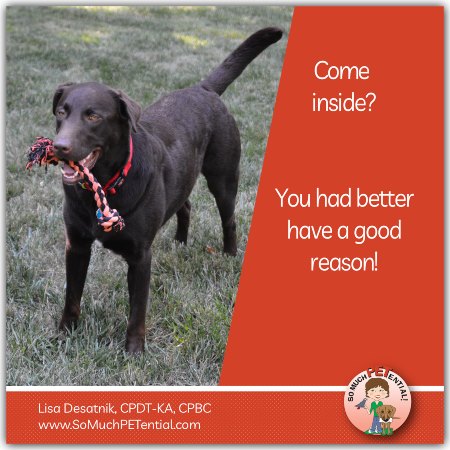
Image Source: somuchpetential.com
Stop Chasing! How To Get Your Dog To Come Inside Now.
Is your dog playing hard to get? Do you wish you knew the best way to get a dog to come inside? The best way is through positive training. You use good things like treats and praise. Can you teach an older dog to come inside? Yes, you can teach any dog, young or old, new tricks. It just takes time. Who is responsible for getting the dog inside? You, the dog owner, are responsible. You must guide your dog kindly. This guide will show you how to stop the chase. You can teach your dog to come inside. You will learn easy steps to make coming inside fun.
Why Your Dog Stays Outside
It can be very frustrating. You call your dog. They just stand there. Or they run the other way. Why do dogs do this? There are many reasons. We will look at them. This helps you find the right fix.
Why Your Dog Won’t Come In: Common Causes
Dogs are simple. They do what feels good. They avoid what feels bad. This is a big part of why dog won’t come in.
- Fun is Outside: Outside is exciting. Birds fly. Squirrels run. There are new smells. Inside might seem boring. Your dog wants to keep playing.
- Fear of Inside: Maybe something bad happened inside. A loud noise. A scolding. Your dog might be scared to come in. Or scared of what happens when they come in.
- The Chase Game: You run after your dog. This is a game for them. They think it is fun. They learn that running away makes you chase.
- No Reward for Coming: Your dog comes in. Do they get a treat? Do they get praise? If not, there is no reason to come. They get nothing good for it.
- Bad Call: You might use a harsh voice. Or you only call them for bad things. Like baths or nail trims. Dogs learn fast. They link your call to bad things.
- Too Much Freedom: Your dog always gets to stay out. They are not used to coming in. They do not see why they should.
- They Don’t Know the Word: Maybe your dog does not know what “come” means. Or “inside.” You need to teach them. Make the words clear.
Knowing these reasons helps you. It helps you change your method. You can make coming inside a good thing.
The Power of Good Rewards
We want our dogs to come inside. We need to make it their idea. This means using good things. We call this positive reinforcement dog come training. It means you add something good. This makes your dog want to do the action again.
Making Coming Inside a Treat
Think about what your dog loves.
* Tasty Treats: Small pieces of meat. Cheese. Hot dogs. These are high-value treats. Your dog will work for them.
* Happy Voice: Your voice is important. Use a bright, cheerful tone. Say “Good dog!” with excitement.
* Praise and Pets: A gentle scratch. A happy pat. These tell your dog they did well.
* Favorite Toy: A quick game of tug. Or a toss of their favorite ball. This can be a great reward.
When your dog comes in, give the reward at once. This links coming in to the good thing. Do this every time. Soon, your dog will rush to come inside. They know good things happen.
Teaching the “Come” Command
The “come” command is key. It is life-saving. It also helps with getting dog back inside. This is dog recall training. We will start indoors. This makes it easier.
Step-by-Step Recall Indoors
This is where you practice the come command indoors. Start in a quiet room. No distractions.
- Start Close: Sit on the floor. Your dog is a few steps away.
- Say the Name: Say your dog’s name. Say “Come!” in a happy voice.
- Show the Treat: Hold a treat at your chest.
- Reward Fast: When your dog comes to you, give the treat. Give praise.
- Repeat Often: Do this many times. Keep sessions short. Maybe 5-10 times.
- Add Distance: Once they get it, move a bit further away.
- Try Different Rooms: Practice in all parts of the house.
- Add Distractions: Once they are good indoors, add small distractions. A toy. A family member.
Always make it a happy game. Never punish your dog if they do not come. This makes them scared. It will make them run away.
Table: Dog Recall Training Progression
| Stage | Environment | Distance | Distractions | Reward Type | Goal |
|---|---|---|---|---|---|
| 1: Basics | Quiet Room, Indoors | 1-2 feet | None | High-value treat, praise | Dog learns “come” means treat. |
| 2: Distance | Quiet Room, Indoors | 5-10 feet, then more | None | High-value treat, praise | Dog comes from further away. |
| 3: Rooms | Various Rooms, Indoors | House-wide | None | High-value treat, praise | Dog comes from anywhere inside the house. |
| 4: Light Distractions | Indoors, Quiet Garden | Variable | Family member, quiet toy | High-value treat, praise | Dog comes with small distractions. |
| 5: Outdoors | Secure Yard | Variable | Other smells, sounds | High-value treat, praise | Dog comes reliably in the yard. |
Luring Your Dog Inside
Sometimes, a direct “come” is not enough. Especially if your dog loves being outside. This is where luring dog inside becomes useful. Luring means you guide your dog. You use a treat or a toy.
Using Treats to Guide Them
- Show the Treat: Stand at the door. Hold a very yummy treat. Let your dog see it. Let them smell it.
- Move Backwards: Slowly take a step back. Go inside. Do not say “come” yet. Just move.
- Keep Luring: Keep the treat near your dog’s nose. Lead them gently. Step by step.
- Give the Treat: Once they are fully inside, give the treat. Give lots of praise.
- Add the Word: After many tries, add the word. Say “Inside!” or “Home!” as they follow the treat.
- Practice: Do this many times. Make it a smooth motion.
Luring with a Favorite Toy
Some dogs love toys more than treats.
- Show the Toy: Wave their favorite toy at the door. Make it exciting.
- Toss Inside: Toss the toy just inside the door. Not too far.
- Reward: When they go in for the toy, give praise. Maybe another small treat.
- Build Up: Slowly toss the toy further inside.
- Add the Word: Say “Inside!” or “Home!” as you toss the toy.
Luring is a great way to start. It helps your dog see coming inside as a good thing. It builds a good habit.
Training Your Dog to Enter the House
This is about teaching dog to go inside. It is more than just coming. It is about willingly entering. It is about making the house a fun place to be.
Making the Doorway a Positive Place
The doorway can be tricky. Some dogs stop right there.
- Treat the Threshold: Put treats just inside the door. Not too far. Your dog steps in for the treat.
- Make it Easy: Keep the door wide open at first. No pressure.
- No Traps: Never close the door on your dog too fast. Make them feel safe.
- Happy Entry: Every time they step in, praise them. Make it a big deal.
Specific Drills for Entry
These help with training dog to enter house willingly.
- The “In” Game: Stand outside the door. Hold a treat. Say “In!” or “Inside!” When your dog steps in, give the treat. Then let them go back out if they want. Repeat.
- Through the Tunnel: If you have a small tunnel or box, practice going through it. This builds comfort with moving through spaces. Then relate it to the door.
- Doorway Dash: Toss a treat across the doorway. Let them dash in to get it. This builds speed and fun for entry.
Consistency is key. Do these small drills often. Make them fun.
Solutions for the Reluctant Dog
Some dogs are just plain stubborn. Or they are truly scared. You need special solutions for reluctant dog. Do not give up. Patience is your best friend.
Breaking Down the Resistance
- Rule Out Fear: Is your dog scared of something inside? A loud noise? A slick floor? A specific person? Fix these issues first. Use mats on slippery floors. Create a calm space.
- Never Punish: Yelling or chasing only makes it worse. Your dog will link coming in to bad things. This stops them from wanting to come.
- The “Go-To-Mat” Trick: Teach your dog to go to a special mat inside. Make this mat very comfy. Put a treat there. Call them to the mat. Once they are on the mat, they are inside. This gives them a clear, positive spot to go to.
- Leash Luring: If all else fails, use a leash. Hook it on. Gently guide them in. Use happy talk. Give treats as they walk through the door. This is a last resort. Do not pull hard. Make it a soft guide.
- High-Value Rewards Only: For a stubborn dog, a regular biscuit might not be enough. Use the best treats you have. Cooked chicken, cheese, or hot dogs work well.
- Change Your Routine: If you always chase, stop. Just stand there. Try luring. Change your energy. Be calm and inviting.
Handling Extreme Cases
For very fearful or resistant dogs:
- Professional Help: Talk to a certified dog trainer or behaviorist. They can see what you are doing. They can offer tailored advice. They might see a reason you missed.
- Desensitization: If a dog is scared, you need to make them less scared. This means very slow steps. Reward them for just looking at the door. Then for one paw inside. Then two. Go at their pace.
- Create an “Inside Oasis”: Make a special, safe space inside. A comfy bed. Favorite toys. A quiet corner. Let them know this spot is theirs. This can be their refuge.
Indoor Boundary Training
Indoor boundary training is not just for staying out. It helps dogs know where they can be. It can also help them know they need to come in to certain spaces. It teaches them about entering areas.
How Boundaries Help with Entry
- Doorways as Boundaries: Think of the outside door as a boundary. Your dog learns that they must cross it to get the reward.
- “Go To Your Bed” for Inside: Teach your dog to go to their bed inside the house. When you call them in, you can then say “Go to your bed.” This gives them a clear task once they are inside.
- Crate Training: A crate can be a safe indoor space. If your dog loves their crate, you can use it to help them come inside. Call them to their crate. This is a common way of getting dog back inside if they are hesitant.
Teaching Specific Entry Points
You can teach your dog to go into specific rooms. This builds their comfort with entering various parts of the house.
- Choose a Room: Pick a room your dog needs to enter. The living room. The kitchen.
- Lure with Treat: Stand inside the room. Lure your dog in with a treat.
- Add a Word: Say “In” or “Room Name” as they enter.
- Reward Inside: Give the treat once they are fully in.
- Practice: Do this often. Make it a fun game.
This skill translates to coming in from outside. If they can enter rooms easily, entering the house becomes easier too.
Getting Your Dog Back Inside
This is often the main goal. Your dog is out in the yard. Or they are playing. You need them to come back inside now.
Strategies for Outdoor Come-In
- The “Party” Call: When you call your dog, make it a huge, happy event. Say “Fido, Party Time!” or “Fido, Treats!” in a very excited voice.
- The “Run-Away” Game: Instead of chasing, run away from your dog towards the house door. Most dogs will chase you. When they follow you inside, give a big reward. This is a good way to get your dog back inside.
- The “Treat Scatter”: Throw a handful of high-value treats just inside the door. Your dog will run in to get them. This works very well for dogs driven by food.
- Leash Up First: If your dog is a runner, put a long line on them. A 20-foot leash. This gives them freedom. But you can gently guide them in if needed. Do not use this to drag them. Just to guide.
- Avoid Ending the Fun: If coming in means playtime stops, your dog will avoid it. Call them in for a few minutes. Give a treat. Then let them go back out for a bit. This teaches them that coming in does not always mean the fun is over. It helps with getting dog back inside without a fight.
- Consistency in Calls: Use the same word every time. “Come!” or “Inside!” or “Home!” Your dog will learn what it means.
What to Do If Your Dog Still Refuses
- Ignore the Bad: If they refuse, do not scold. Just walk away. Go inside. Close the door (if safe). Wait a few minutes. Then try again with positive methods. Sometimes, ignoring the behavior works.
- Try a Different Reward: If treats are not working, try a toy. Or a quick game of tug. Find what motivates them most at that moment.
- Stay Calm: Your stress can make your dog stressed. Be calm. Be patient. This is a training process. It takes time.
- Revisit Basics: If your dog is struggling outside, go back inside. Practice the “come” command in a quiet room. Build up their skills again.
Building Lasting Habits
Training is not a one-time thing. It is ongoing. You want your dog to come inside every time. Without a fuss.
Consistency and Practice
- Every Day: Practice the “come” command every day. Short sessions are best.
- Different Places: Practice in different parts of your yard. Different times of day.
- All Family Members: Make sure everyone in the house uses the same words. And the same rewards. This helps your dog learn faster.
- Keep it Fun: Always make coming inside a happy game. If it becomes a chore, your dog will resist.
Avoid These Common Mistakes
- Chasing Your Dog: This teaches them to run. It makes it a game.
- Calling for Punishment: If you only call your dog to scold them, they will learn to avoid you.
- Not Enough Reward: A quick pat is not always enough. Use high-value treats.
- Getting Angry: Anger makes your dog fearful. It breaks trust.
- Giving Up Too Soon: Training takes time. Be patient. Every small step is a win.
- Inconsistent Commands: Using “Come,” then “Get here,” then “Inside.” Stick to one word.
By avoiding these pitfalls, you make the training process smoother. You build a strong bond with your dog.
Conclusion: A Home Your Dog Loves
Getting your dog to come inside does not have to be a battle. It is about teaching. It is about positive reinforcement. It is about making your home a place your dog wants to be. By using treats, praise, and fun games, you can turn a frustrating chase into a joyful welcome.
Remember:
* Make coming in a happy event.
* Always reward your dog.
* Be consistent with your commands.
* Stay calm and patient.
You can stop the chase. You can enjoy a dog who comes happily when called. It takes effort. But a happy, well-behaved dog is worth it. Start today. Make coming inside a joy for both of you.
Frequently Asked Questions (FAQ)
h4 What if my dog plays “keep away” when I try to get them inside?
Your dog sees it as a fun game. Stop chasing. Turn and run inside yourself. Many dogs will follow. When they come near the door, reward them. You can also try tossing a high-value treat just inside the door. This often works to get them to come in.
h4 How long does it take to train a dog to come inside reliably?
It depends on the dog. Some dogs learn very fast. Others take more time. Be patient. Practice every day. Small, short sessions are best. You might see progress in a few weeks. Full reliability can take months. Keep practicing, even after they seem good.
h4 Should I use a leash to get my dog inside if they won’t come?
Only as a last resort. Use a long leash. Do not pull hard. Gently guide your dog. Give treats and praise as they come in. If you pull too hard, it can make them scared. It can make them dislike the leash. The goal is for them to come on their own.
h4 My dog only comes inside if I shake their food bowl. Is that okay?
It works, but it links coming in only to mealtime. It is better to use different high-value treats. Or toys. This makes coming in a general good thing. Not just for food. You want them to come any time you call.
h4 What if my dog seems scared of the doorway?
Check if the floor is slippery. Put down a rug or mat. Make sure nothing is loud or scary near the door. Lure them gently with treats. Put treats right on the threshold. Reward every tiny step they take toward or into the doorway. Go very slowly. Do not push them.
h4 What if my dog loves being outside too much?
Make inside just as fun. Give special treats only inside. Play a fun game right after they come in. Let them go back outside for a short time after they come in. This teaches them that coming in does not end all fun. It can even lead to more fun.
h4 Can I punish my dog for not coming when called?
No, never. Punishment makes dogs afraid. They will then avoid you even more. It breaks trust. It makes training much harder. Always use positive rewards. Make coming to you a joyful thing.
h4 Is it bad if I call my dog to come inside and then do something they don’t like, like give them a bath?
Yes, it is bad. If you only call them for baths, they will link your call to bad things. Try to call them for good things too. Call them, give a treat, and let them go. Call them for playtime. Make your “come” command always mean something good.