
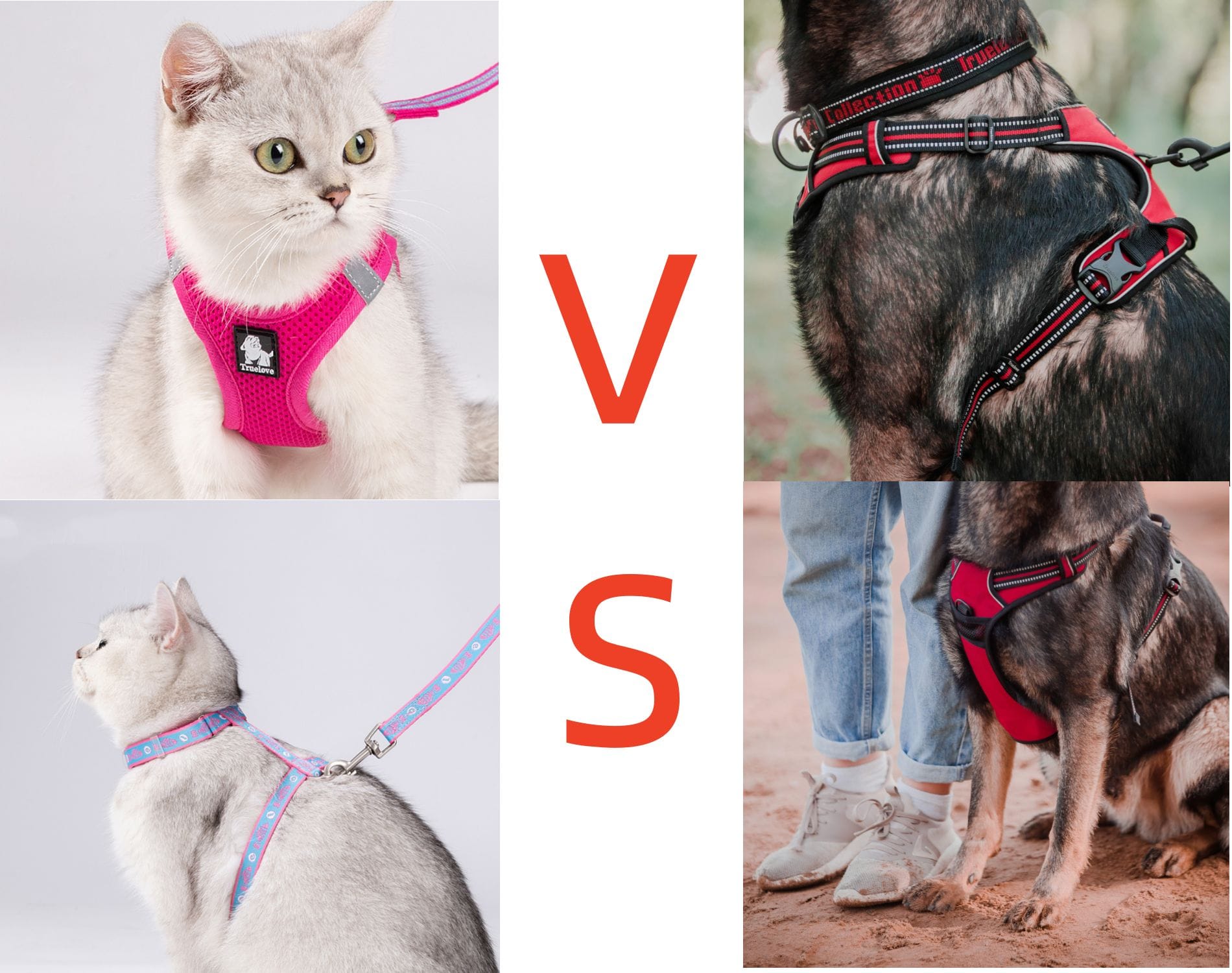
Image Source: truelove-pet.com
Can You Use A Dog Harness For A Cat? Dangers & Tips.
Can you use a dog harness for a cat? In most cases, no. It is not a good idea. Dog harnesses are made for dogs. Cats have very different bodies. Using a dog harness can be unsafe for your cat. It can lead to escapes and even injuries. Always pick a harness made for cats. This keeps your cat safe and happy.
Core Disparities: Cat Harness vs Dog Harness
Many people think a small dog harness might work for a cat. But there are big differences. A cat’s body is not like a dog’s. This matters a lot for a harness. Cat harness vs dog harness designs show this clearly.
Anatomical Variations Influence Design
Cats have a unique body shape. They are very flexible. Their bones are smaller. They can squeeze through tight spots. A cat’s rib cage is narrower than a dog’s. Their shoulders are different too. Dogs have a more boxy shape. They are stronger. Their chests are wider.
Because of this, harnesses are made differently. A cat harness fits snug. It wraps around the chest and often the belly. This keeps the cat secure. A dog harness might fit loosely on a cat. It can slip around. This makes it easy for a cat to get out. Or it can cause rubs.
Material and Durability Differences
The stuff harnesses are made from also varies. Cats need light, soft materials. Their skin is delicate. Heavy or rough fabrics can cause problems. Dogs often need strong, tough materials. They can pull harder. They might chew on their harness. So, dog harnesses are built to last through more wear and tear.
A dog harness might feel too heavy for a cat. It could make them hot. It might rub their fur the wrong way. These issues make the cat uncomfortable. They might not want to wear it.
Design and Closure Mechanics
Cats are famous for escaping. They are like liquid. They can twist and turn. A cat harness has features to stop this. Many cat harnesses have wider straps. Or they cover more of the body, like a vest. They often have multiple points of adjustment. This helps get a very snug fit. The buckles are often placed to be hard for cats to reach. They are also very secure. This makes an escape proof cat harness.
Dog harnesses are usually simpler. They might have a single strap around the chest. Or a clip behind the neck. This works for dogs. Dogs usually do not try to back out of harnesses. They walk forward. But a cat can easily slip out of a typical dog harness. They can wriggle free. The design is not right for a cat’s escape artist skills.
Here is a simple look at the differences:
| Feature | Cat Harness | Dog Harness |
|---|---|---|
| Body Shape Fit | Narrower chest, flexible spine, snug fit | Wider chest, more robust, less flexible |
| Flexibility | Allows for cat’s bending, twisting | Designed for forward movement, less stretch |
| Escape Tendency | Designed to prevent backing out and slipping | Less focus on escape prevention |
| Material | Lightweight, soft, breathable | Often heavier, durable, sometimes rigid |
| Buckles/Closures | Multiple secure adjustments, hard to open | Simpler, often quick-release clips |
| Pressure Points | Spreads pressure evenly on chest/shoulders | Can put pressure on cat’s throat/joints |
Perils of a Dog Harness on a Cat: Reasons Not To Use
Using a dog harness on a cat comes with many risks. These risks are why most vets say not to do it. The safety of your cat is most important. Here are some reasons not to use dog harness on cat. These points also cover dog harness for cats safety issues.
Escape Risk: The Primary Concern
Cats are masters of escape. They can slip out of things easily. Dog harnesses are not made for this. They do not hold a cat tight enough. A cat can back out of a dog harness in seconds. They can twist their body. They can then run away. This is very dangerous. An escaped cat can get lost. They can get hit by a car. They can get into fights with other animals. Finding a lost cat is very hard. This is the main reason a dog harness is not an escape proof cat harness.
Injury Potential: Choking and Rubbing
A harness that does not fit right can hurt your cat. If a dog harness is too loose, it can rub. It can cause chafing. This can make their skin sore. It can even lead to open wounds. If it is too tight in the wrong spot, it can choke them. Many dog harnesses pull from the neck area. This is bad for a cat’s delicate throat. It can hurt their windpipe. It can make breathing hard. This risk is very serious.
A dog harness might also put pressure on a cat’s shoulder blades. This can restrict their movement. It can make walking painful. Over time, this can lead to other health problems. Improper fit also causes fur loss in areas where the harness rubs.
Discomfort and Stress
Imagine wearing clothes that do not fit. They would feel bad. A harness that is wrong for a cat causes discomfort. It can make them stressed. Cats do not like feeling trapped. If the harness is bulky or heavy, they might not move right. They might freeze up. They might try to take it off. This can make them scared of walks. It can make them dislike any harness. This answers the question: can cats wear dog vests? While they can technically wear them, it will likely be very uncomfortable and stressful for them. It is not kind to your cat.
Behavioral Issues
If a cat has a bad experience with a harness, they might not want to go outside. They might connect the harness with pain or fear. This can change their behavior. They might hide when they see the harness. They might become anxious. They might stop wanting to explore. This defeats the purpose of getting a harness. The goal is to let them explore safely. A bad harness makes this hard.
The Myth of the Small Dog Harness on Cat
Many people think, “My cat is small. A small dog harness will work.” This is a common mistake. It directly addresses the “small dog harness on cat” concern.
Size Does Not Equal Fit
Just because a harness says “extra small dog” does not mean it fits a cat. Cats and small dogs have very different body shapes. A Chihuahua might be small. But its body is still built like a dog. Its chest is wider. Its neck is thicker. A cat’s body is slender. It is more tubular. A small dog harness will still be too wide for a cat’s chest. It will be too loose around their narrow neck.
The proportions are wrong. A dog harness might be long enough. But it will not sit right on the cat’s unique bone structure. This means all the safety issues still apply. The cat can still slip out. The harness can still rub or choke them.
Continued Safety Concerns
Even a small dog harness does not make a cat harness safe. The material might still be too heavy. The buckles might not be secure enough. The design will not stop a cat from escaping. It will not spread pressure evenly. All the dangers mentioned before are still true. It is much better to buy a harness made for cats. This is the only way to ensure proper cat harness fit.
Securing the Best Fit: Proper Cat Harness Fit is Key
Finding the right harness is vital. A proper cat harness fit means safety and comfort. It makes the experience good for your cat. This section is all about how to get that perfect fit.
Why Fit Matters So Much
A well-fitting harness does many things. First, it keeps your cat safe. They cannot slip out. This stops them from getting lost or hurt. Second, it makes them comfortable. They can move freely. They can explore without pain. Third, it helps with training. If they like the harness, they will be happy to wear it. This makes walks fun. A bad fit can ruin all of this. It can make your cat hate the harness. It can make them fear going outside.
Measuring Your Cat for a Harness
To get a good fit, you need to measure your cat. This is simple to do.
- Get a soft tape measure: Like the kind used for sewing.
- Measure the neck: Put the tape measure around your cat’s neck. Do this where their collar would sit. It should be snug but not tight. You should be able to get one finger under the tape.
- Measure the girth (chest): This is the most important measure. Put the tape measure around the widest part of your cat’s chest. This is usually right behind their front legs. Again, it should be snug. You should be able to get two fingers under the tape.
- Write down the numbers: Compare these to the harness size chart. Every brand has a chart. Do not just guess.
Checking the Fit
Once you have a harness, put it on your cat. Then check the fit carefully.
- The Two-Finger Rule: After putting on the harness, try to slip two fingers between the harness and your cat’s body. Do this on the neck and chest straps. If you can fit two fingers, it is probably snug enough. If you can fit more, it is too loose. If you cannot fit two fingers, it is too tight.
- Observe Movement: Watch your cat. Can they walk normally? Can they jump? Can they lie down? The harness should not stop their natural movement. They should not look stiff or uncomfortable.
- Check for Rubbing: Look for red spots or fur loss after a few uses. This means the harness is rubbing. It is too tight or the wrong shape.
- Try to Escape: Gently try to pull the harness forward over their head. Or try to back them out of it. If they can escape easily, it is not safe. A good harness will not let them slip out.
Optimal Solutions: Purpose-Built Cat Harnesses
The best choice is always a harness made for cats. These are designed for their specific needs. They offer the best “dog harness for cats safety” – by not being a dog harness! They are truly escape proof cat harness options.
Types of Cat Harnesses
There are a few common types of cat harnesses:
- H-Style Harness: This harness looks like an “H” when laid flat. It has loops for the neck and chest. A strap connects them along the back.
- Pros: Lightweight, simple, good for cats who do not like a lot of material.
- Cons: Can be easier for some cats to escape if not fitted very tightly. May put more pressure on the neck if the cat pulls hard.
- Vest-Style Harness (Cat Walking Vest): This harness covers more of the cat’s body. It is often a solid piece of fabric. It wraps around the chest and back.
- Pros: Very secure, hard to escape from. Spreads pressure evenly. Comfortable for many cats. Often feels more like a hug, which some cats like. This is often the best escape proof cat harness.
- Cons: Some cats might not like the feel of so much material. Can be warmer in hot weather.
- Figure-8 Harness: This harness has two loops. One goes around the neck, one around the girth. They cross over on the back.
- Pros: Simple design.
- Cons: Can be very escape-prone if not adjusted perfectly. Can put pressure on the throat. Not as common or recommended as H-style or vest-style.
Features of a Good Cat Harness
When buying a cat harness, look for these features:
- Lightweight Materials: Choose soft, breathable fabrics. Nylon mesh or soft cotton blends are good. Avoid heavy leather or stiff materials.
- Adjustability: A good harness has many points to adjust. Look for straps that can be tightened or loosened. This helps get a custom fit for your cat’s unique shape.
- Secure Buckles: Make sure the buckles are strong. They should snap firmly. They should not come undone easily. Some have double security features.
- Even Pressure Distribution: The harness should spread pressure. It should not dig into one spot. Vest styles are often best for this. They avoid putting all the pull on the neck or shoulders.
- Reflective Strips: If you plan to walk at dawn or dusk, reflective material is a bonus. It helps your cat be seen.
- Durable Stitching: Check that all seams are sewn well. Strong stitching means the harness will last. It will also hold up to your cat’s movements.
Alternatives to Dog Harnesses for Cats: What Else Works?
Sometimes, a cat might not like wearing any harness. Or you might want other ways to let them enjoy the outdoors. There are many great alternatives to dog harnesses for cats. These offer safe ways for your cat to experience new sights and sounds.
Cat Backpacks
A cat backpack is a special carrier. It is like a small backpack for you to wear. But it has clear windows or mesh panels. Your cat sits inside it. They can see the world from a safe spot.
* Pros: Your cat is completely secure. They cannot escape. They are protected from other animals. It is good for cats who do not like walking on a leash.
* Cons: You have to carry them. It might not be as active as a walk.
Cat Strollers
Yes, cat strollers exist! They are like baby strollers but for cats. Your cat sits inside. You push them around.
* Pros: Great for older cats. Good for cats with health issues. They can enjoy fresh air without walking. Very safe and secure.
* Cons: Can be bulky to store. Not as portable as a backpack.
Secure Catio or Enclosure
A catio is an outdoor enclosure. It is a safe space for cats to be outside. It can be small or large. It is usually attached to your house.
* Pros: Your cat gets fresh air and sun. They are safe from dangers like cars or predators. They can go outside any time they want. No harness needed at all.
* Cons: Requires building or buying. It is a fixed location.
Indoor Enrichment
Sometimes, the best solution is to make indoor life very exciting. Not all cats want to go outside. Many cats are perfectly happy staying inside.
* Pros: Very safe. No risk of escape or outdoor dangers.
* Cons: Requires effort to keep things interesting.
* Tips:
* Interactive Toys: Use toys that make your cat think and play. Laser pointers, feather wands, puzzle feeders are great.
* Climbing Structures: Cats love to climb. Tall cat trees, shelves, or wall perches give them vertical space.
* Window Perches: A comfy spot by a window lets them watch birds and squirrels. This can be very entertaining.
* Rotate Toys: Keep things fresh. Put some toys away and bring them out later.
* Playtime: Schedule daily play sessions. This bonds you and your cat. It also helps them burn energy.
Getting Your Cat Used to a Harness
Once you have the right cat harness, you need to introduce it slowly. This process needs patience. Do not rush it.
Patience is a Virtue
Cats do not like sudden changes. They need time to get used to new things. Do not force the harness on them. This will only make them scared. Think of it as a slow, gentle process.
Short Sessions
Start with very short sessions.
1. Just the Harness: First, leave the harness near their food bowl or sleeping spot. Let them sniff it. Let them get used to seeing it.
2. Brief Wearing: After a few days, put the harness on them for a minute or two. Do this while they are eating or playing. Distract them.
3. Increase Time: Slowly increase the time they wear it. Go from 5 minutes to 10, then 15. Do this over days or weeks.
Reward Good Behavior
Always use positive reinforcement.
* Treats: Give your cat their favorite treats when they wear the harness. Give them when you put it on. Give them when you take it off.
* Praise: Use a happy voice. Pet them.
* Play: Make harness time fun. Play with them right after you put it on.
* Never Punish: Do not scold or punish your cat if they fight the harness. This will make them hate it even more. Just take it off and try again later.
Indoor Practice First
Before going outside, practice indoors.
* Walk on Leash Indoors: Once your cat is fine with the harness, attach the leash. Let them drag it around first.
* Guide Them: Gently guide them with the leash. Do not pull. Let them lead the way.
* Explore Rooms: Let them walk around different rooms. Let them get used to the feel of the leash.
* Build Confidence: When they are comfortable indoors, then you can try a short outdoor walk. Start in a quiet, safe area like your backyard.
Concluding Thoughts: Prioritizing Feline Safety and Comfort
Can you use a dog harness for a cat? The answer is a clear “no” if you care about your cat’s safety and well-being. Dog harnesses are not made for cats. They do not fit right. They are a big escape risk. They can cause discomfort and harm.
Your cat’s safety is the most important thing. Choose a harness made just for cats. Make sure it has a proper cat harness fit. This means measuring your cat. It means choosing the right type of harness. It means checking the fit often.
Taking your cat outside can be a wonderful experience. It adds richness to their life. But it must be done safely. A proper cat harness makes this possible. It lets your cat explore without danger. It keeps them comfortable. It keeps them happy. Invest in the right gear. It will make a big difference for your feline friend.
Commonly Asked Questions (FAQ)
Is it okay to walk a cat on a leash?
Yes, it is perfectly fine to walk a cat on a leash. Many cats enjoy exploring outside safely. You just need the right harness and proper training.
What type of harness is best for cats?
Vest-style harnesses are often the best choice for cats. They are very secure. They spread pressure evenly. This makes them comfortable. H-style harnesses can also work well. Choose one that fits your cat’s body type and comfort level.
How do I know if the harness fits my cat?
Use the two-finger rule. You should be able to slip two fingers under the harness straps. This should be true for both the neck and chest areas. The harness should feel snug but not tight. Watch your cat. They should be able to move freely. Look for any rubbing or signs of discomfort after wearing it.
My cat hates the harness. What should I do?
Patience is key. Do not force it. Start very slowly. Let your cat get used to seeing the harness first. Then, put it on for just a minute or two. Always give treats and praise. Make the harness a good experience. Increase the time gradually. If they keep fighting it, try a different style of harness. Some cats simply do not like harnesses.
Can cats wear dog vests?
While a cat might physically wear a small dog vest, it is not recommended. Dog vests are not designed for a cat’s unique body. They will likely be uncomfortable. They will not offer the same safety or secure fit as a cat-specific vest. This can lead to escapes or injuries.
What are other ways for my cat to enjoy the outdoors if they don’t like a harness?
You can use a cat backpack or a cat stroller. These let your cat see the world from a safe, enclosed space. Building a secure catio or outdoor enclosure is another great option. For cats who prefer staying indoors, focus on indoor enrichment. Provide plenty of toys, climbing structures, and window perches.