
Image Source: lirp.cdn-website.com
Despite Their Size; Can A Shih Tzu Be A Service Dog?
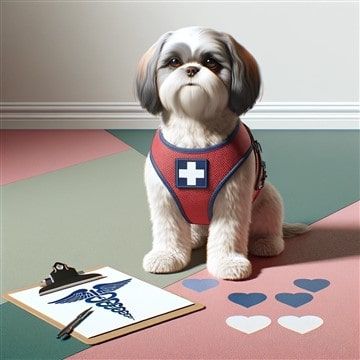
Yes, a Shih Tzu absolutely can be a service dog. While many people picture larger breeds like Labs or Golden Retrievers, the law does not set size limits for service dogs. What matters is if the dog is trained to do specific tasks that help a person with a disability. A Shih Tzu, like any other breed, must meet the ADA service dog definition by being individually trained to perform such tasks. They are not just pets; they are working animals. A Shih Tzu emotional support dog, on the other hand, is different; they provide comfort just by being there and do not require special training for specific tasks.
Fathoming What A Service Dog Is
A service dog is a dog that is specially trained to help a person with a disability. The Americans with Disabilities Act, known as the ADA, sets the rules for service dogs. According to the ADA service dog definition, a service dog is a dog that is trained individually to do work or tasks for a person with a disability. This disability can be physical, sensory, psychiatric, intellectual, or another mental disability. The work or tasks must be directly related to the person’s disability. For example, a guide dog helps a blind person walk safely. A dog might help a person who uses a wheelchair by picking things up. These tasks are not just about making the person feel better. They are actions the dog takes that help the person manage their disability.
Emotional Support Animals Are Different
It is important to know the difference between an emotional support animal vs service dog. This is a big point of confusion for many people.
- Service Dogs: As we said, these dogs are trained to do specific tasks for a disabled person. They have public access rights under the ADA, meaning they can go most places the public can go, like stores, restaurants, and hotels, even if pets are not allowed. The training is about actions the dog performs to help with the disability.
- Emotional Support Animals (ESAs): These animals provide comfort just by being with their owner. They do not need to be trained to do specific tasks. Their presence alone helps with conditions like anxiety or depression. However, ESAs do not have the same public access rights as service dogs under the ADA. They are protected in housing under a different law (the Fair Housing Act) but cannot go everywhere service dogs can go. A Shih Tzu emotional support dog can provide great comfort, but this is different from a Shih Tzu service dog trained for tasks.
Do Service Dog Size Limits Exist?
No, the law does not say a service dog has to be a certain size or weight. The ADA service dog definition focuses only on the training and the work the dog does. A large dog might be needed to help someone balance or pull a wheelchair. But a small dog can do many other helpful tasks. So, the idea of service dog size limits is a myth. This means that small dog service dog breeds are just as valid as large ones, as long as they are properly trained. This opens the door for smaller dogs like the Shih Tzu to be considered.
Can Small Dogs Be Service Animals?
Yes, absolutely. Can small dogs be service animals? A loud yes! Many types of small dogs can be service animals. What tasks they can do depends on their size, strength, and training. A small dog cannot pull a wheelchair. But they can do many things that help people. They can fetch things, alert to sounds, remind owners to take medicine, or provide deep pressure therapy on a smaller scale by lying on a person’s lap or chest during a panic attack. The best small service dog breeds are often smart, eager to please, and trainable. Breeds sometimes used include Pomeranians, Chihuahuas, Poodles (miniature or toy), and Cavalier King Charles Spaniels. And, yes, the Shih Tzu can be on this list too.
Interpreting The Shih Tzu Breed
The Shih Tzu is a small dog known for its long hair and friendly face. They were first kept by Chinese royalty. They are typically friendly, loyal, and enjoy being with their people.
- Temperament: Shih Tzus are often described as outgoing and loving. They usually like meeting new people. This is a good trait for a service dog, as they need to be calm in public places. They are not typically aggressive or overly shy.
- Intelligence and Trainability: Shih Tzus are reasonably smart. Training a Shih Tzu can take patience, as they can sometimes be a little stubborn. But with the right methods – using rewards and positive reinforcement – they can learn many commands and tasks. Their desire to please their owner helps in training.
- Size: They are a small breed, usually weighing between 9 and 16 pounds. This size makes them portable but also limits the physical tasks they can perform.
- Health: Like all breeds, Shih Tzus can have certain health issues, such as breathing problems due to their short nose, eye issues, and joint problems. A service dog must be healthy and able to work consistently. Regular vet care is very important.
Shih Tzu Service Dog Requirements
For a Shih Tzu to become a service dog, it must meet several important requirements. These are the same requirements for any service dog, regardless of breed or size.
- Owner has a Disability: The person needing the service dog must have a physical or mental disability as defined by the ADA.
- Dog is Individually Trained: The dog must be trained to do specific work or tasks that directly help the person with their disability. Simply making the person feel better is not a task under the ADA.
- The Task is Directly Related to the Disability: The work or tasks the dog does must be actions that lessen the effects of the disability.
- Dog is Housebroken: The dog must be reliably housebroken.
- Dog is Under Control: The dog must be under the control of its handler (the person with the disability) at all times. This usually means being on a leash, unless the leash interferes with the dog’s work.
These Shih Tzu service dog requirements mean more than just having a sweet pet. The dog needs special training for a real job.
Tasks A Shih Tzu Service Dog Can Perform
Even though they are small, a Shih Tzu can be trained to do many helpful tasks for someone with a disability. The tasks a Shih Tzu service dog can perform will use their size and natural abilities. They won’t be pulling wheelchairs, but they can do:
- Alerting to Sounds: A Shih Tzu has good hearing. They can be trained to alert a person who is deaf or hard of hearing to important sounds like a doorbell, phone ringing, smoke alarm, or alarm clock. They might nudge or paw the person, then lead them to the sound.
- Fetching Small Items: They can pick up small objects that are on the floor, like dropped keys, a phone, or medication bottles. This is very helpful for someone who has trouble bending over or reaching.
- Deep Pressure Therapy (Lap/Chest Size): For people with anxiety, panic attacks, or PTSD, the weight of a dog can be calming. A small dog like a Shih Tzu can be trained to lie on the person’s lap or chest during times of distress to provide this comfort through pressure.
- Reminding for Medication/Routine: They can be trained to nudge or paw their owner at specific times to remind them to take medication or complete a task.
- Finding People or Places: In a familiar place, they can be trained to lead their owner to an exit, a specific person, or a car.
- Providing a Buffer: For people with social anxiety or those who need personal space, a small dog can stand close by, creating a physical barrier between the handler and others.
- Interrupting Behaviors: They can be trained to interrupt repetitive or harmful behaviors like skin picking, head banging, or leg shaking by nudging the person.
These are just examples. The specific tasks depend on the individual person’s needs and the dog’s training.
Training A Small Service Dog
Training a small service dog, like a Shih Tzu, involves several steps. It takes a lot of time, consistency, and positive methods. Training a small service dog is not much different from training a large one, but the tasks will be different due to size.
Early Start
Training should start early. Puppies can begin learning basic obedience and getting used to different places (socialization). Good socialization is key for any service dog. They must be comfortable and calm in many different environments – crowded stores, noisy streets, quiet offices.
Obedience Training
Solid basic obedience is a must. A service dog needs to:
* Walk calmly on a leash.
* Sit, stay, and lie down when told.
* Come when called.
* Not bark or bother others in public.
* Be well-behaved around other people and animals.
This forms the base for later task training.
Task Training
Once basic obedience is strong, specialized task training begins. This is where the dog learns the specific actions to help with the disability.
* Alerting: This involves teaching the dog to recognize a specific sound (like an alarm) and then perform an action (like nudging the handler) to get their attention. Then, the dog learns to lead the handler to the source of the sound.
* Fetching: The dog learns to pick up objects on command. This involves teaching them to hold items gently without chewing them and bringing them back to the handler.
* Pressure: The dog learns to lie down on the handler on command or when sensing distress. This takes practice to ensure the dog stays calm and in place.
* Reminders: This involves using timers or other cues to signal the dog that it is time to perform a reminder behavior, like a nudge.
Training often involves breaking down tasks into small steps and rewarding the dog for each correct step. Professional service dog trainers can be a great help, especially for complex task training. While owner-training is allowed by the ADA, it requires a lot of commitment and knowledge.
Are Shih Tzus Among The Best Small Service Dog Breeds?
While popular breeds like Miniature Poodles or Cavalier King Charles Spaniels are often mentioned as best small service dog breeds due to their trainability or temperament, a Shih Tzu can certainly be a good candidate. It depends on the individual dog’s traits. A calm, smart, healthy, and eager-to-please Shih Tzu has the potential. Some breeds might be easier to train generally, but the success of a service dog largely comes down to the individual dog, the quality of training, and the specific tasks needed. So, while not the most common, a Shih Tzu could potentially be one of the best small service dog breeds for the right person and the right tasks.
Service Dogs In Public Places
Under the ADA, a service dog is allowed to go almost anywhere the public is allowed. This includes stores, restaurants, hotels, and public transport. Business owners cannot refuse entry to a person with a service dog. They also cannot ask about the person’s disability. They can only ask two questions:
1. Is the dog a service animal required because of a disability?
2. What work or task has the dog been trained to perform?
They cannot ask the dog to perform the task. They also cannot ask for paperwork or identification for the dog. A service dog handler cannot be charged extra fees because of the dog. However, if the dog is out of control or not housebroken, a business can ask the person to remove the dog. This is why solid training, including public access training, is so important for a Shih Tzu service dog.
Comprehending The Path To Becoming A Service Dog
Turning a pet Shih Tzu into a service dog is a big job. It needs careful planning and training. It’s not just about putting a vest on a dog.
- Finding the Right Dog: Not every Shih Tzu has the right temperament to be a service dog. They need to be calm, confident, not easily scared by new things, and motivated to work. Sometimes, finding a puppy from a breeder who focuses on temperament is a good start. Rescue dogs can also be great service dogs, but their history needs to be understood.
- Training Commitment: Training takes hundreds of hours. It requires consistency every single day, for maybe up to two years, depending on the complexity of the tasks.
- Cost: Training can be expensive, whether working with a professional trainer or handling it yourself (cost of supplies, classes, potential setbacks).
- Public Access Training: The dog needs to learn to behave perfectly in public. This means ignoring distractions like food on the floor, other people, and other animals. They must remain focused on their handler.
It is a significant commitment, but for the right person and the right Shih Tzu, it can lead to a life-changing partnership.
Shih Tzu As An Emotional Support Dog vs Service Dog
It’s worth looking again at the difference for Shih Tzus. A Shih Tzu emotional support dog provides comfort simply by being present. Their cuddly nature and affection can help people with anxiety, depression, or loneliness. They do not need specific task training. Their role is therapeutic presence. They are valuable companions but do not have the public access rights of service dogs under the ADA.
A Shih Tzu service dog, however, has undergone rigorous training to perform specific actions that help with a disability. This could be alerting to sounds for a deaf handler, fetching dropped items for someone with mobility issues, or providing tactile stimulation during a panic attack. This task training is the key difference that grants them legal public access rights. Both roles are helpful, but they serve different purposes and have different legal standing.
Other Considerations for a Shih Tzu Service Dog
Beyond training and tasks, a few other points are important:
- Grooming: Shih Tzus need regular grooming because of their long hair. This is necessary for the dog’s health and comfort, especially if they are going into different environments as a service dog. Matting can be painful and unhygienic.
- Heat Sensitivity: Due to their short noses (brachycephalic), Shih Tzus can overheat easily. Handlers need to be careful in warm weather and during exercise. This is a practical consideration for a working dog.
- Breed Perception: Some people might not take a small dog seriously as a service dog. This is incorrect and based on misconceptions about service dog size limits. Handlers may sometimes face pushback, though legally, the dog should be granted access if it is a service dog performing tasks. Carrying an ADA FAQ card can sometimes be helpful, though not legally required.
Summary of Shih Tzu Service Dog Capabilities
Let’s put the capabilities and limitations into a simple view.
| Aspect | Capability for a Shih Tzu Service Dog | Limitation for a Shih Tzu Service Dog |
|---|---|---|
| Temperament | Can be friendly, calm, good in public with training. | Can sometimes be stubborn, requires consistent positive training. |
| Size | Good for tasks like fetching small items, alerts, lap pressure. | Cannot perform heavy tasks like pulling or bracing. |
| Trainability | Can learn many obedience commands and specific tasks with patience. | May take longer than some breeds; can have independent streaks. |
| Tasks | Alerting to sounds, fetching small items, medication reminders, DPT on lap. | Mobility support (balance, pulling), guiding the visually impaired. |
| Public Access | Allowed under ADA if trained for tasks. | May face public skepticism due to size (though legally irrelevant). |
| Health | Can be healthy with good care. | Prone to heat issues, eye problems, breathing issues (requires care). |
Best Small Service Dog Breeds – A Quick Look
While any breed can be a service dog, some small breeds are more often chosen because of typical traits that fit the role well. These are often considered among the best small service dog breeds:
- Miniature Poodle: Very smart, highly trainable, hypoallergenic coat, energetic but can be calm indoors. Good for alerts, fetching, medical alert tasks.
- Cavalier King Charles Spaniel: Gentle, eager to please, very bonded to owners. Good for medical alerts (like seizures or blood sugar changes), anxiety tasks, fetching.
- Pomeranian: Can be trained for alerts (sound or medical), fetching small items. Very loyal. Can be prone to barking if not trained well.
- Chihuahua: Smallest option, but can do alerts (medical or sound), fetching very light items. Requires careful socialization.
- Schipperke: Energetic and alert. Good for hearing alerts. Needs firm, consistent training.
The Shih Tzu fits into this group of potential candidates, offering its own mix of traits suitable for certain service tasks.
Grasping The Commitment
Deciding to train a Shih Tzu as a service dog is a major life choice. It means dedicating yourself to the dog’s training, health, and well-being for its entire working life. The dog becomes more than a pet; it becomes a vital tool that helps manage a disability. It requires patience, resources, and a deep bond with the dog. The rewards, however, can be immense, providing greater independence and safety for the handler.
Frequently Asked Questions (FAQ)
Q: Does a Shih Tzu service dog need to wear a vest or special gear?
A: No, the ADA does not require service dogs to wear a vest, ID tag, or harness. However, many handlers choose to use vests or specific gear in public to help signal that the dog is a working animal and to avoid unnecessary questions.
Q: Can I train my current pet Shih Tzu to be a service dog?
A: Maybe. It depends on the dog’s temperament, health, age, and your commitment to providing the necessary intensive training. Not all dogs are suited for service work, even with training. An evaluation of the dog’s suitability is often the first step.
Q: Is there a registration or certification needed for a Shih Tzu service dog?
A: No, the ADA does not require any federal or state registration or certification for service dogs. Beware of online sites selling service dog certifications; these are not legally recognized under the ADA. The dog’s training and ability to perform tasks are what matter.
Q: How long does it take to train a Shih Tzu service dog?
A: Service dog training typically takes 1.5 to 2 years or even longer, depending on the tasks and the dog. It is an ongoing process throughout the dog’s life.
Q: Can a Shih Tzu service dog help with mental health disabilities?
A: Yes, if the dog is trained to perform specific tasks that help manage the mental health disability. Examples include interrupting self-harming behaviors, reminding to take medication, or performing room searches for someone with PTSD. Providing only comfort or reducing anxiety just by being present falls under the role of an emotional support animal, not a service dog.
In Closing
The answer is clear: despite their small size, a Shih Tzu can indeed be a service dog. They might not be able to help with tasks requiring great strength, but their intelligence, loyalty, and size make them capable of performing many important tasks that assist people with disabilities. Meeting the Shih Tzu service dog requirements means finding a suitable individual dog and committing to rigorous, specific task training. While less common than larger breeds or even some other small dog service dog breeds, a well-trained Shih Tzu can be a valuable and life-changing service animal.