
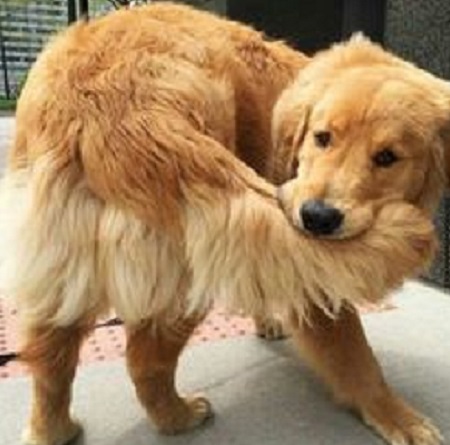
Image Source: www.grrmf.org
Health & Behavior: Why Does A Dog Chew Its Tail Explained
Why does a dog chew its tail? Dogs chew their tails for many reasons. It can be due to itchiness, pain, stress, or even just boredom. Sometimes, it points to a health problem. This act is often a sign. It means your dog needs help. Dogs cannot tell us what hurts. They use actions instead. Tail chewing is a common sign. It shows something is wrong. We need to find out what it is. This guide will help you learn more. We will look at common reasons. We will also talk about how to help your dog.
Fathoming The Root Causes of Tail Chewing
Dogs chew their tails for different reasons. Some are simple. Others are complex. It is important to know the cause. Only then can you help your dog. We will break down the main reasons. These include health issues and feelings.
Medical Reasons: When Their Tail Hurts or Itches
Many times, a dog chews its tail because of a medical problem. The tail might hurt. It might also feel very itchy. These issues need a vet’s help.
Dog Tail Itching Reasons: The Itch Factor
An itchy tail is a big reason for chewing. Imagine a very bad itch. You would want to scratch it. Dogs do the same. They use their mouths.
Flea Allergy Dermatitis Dogs: Tiny Invaders, Big Itch
Fleas are tiny bugs. They live on your dog’s skin. They bite to drink blood. Some dogs are very allergic to flea bites. This is called flea allergy dermatitis dogs. Even one bite can cause a huge itch. Dogs often chew their tail base. This is where fleas like to hide.
- Signs:
- Lots of itching.
- Red skin.
- Bumps.
- Hair loss.
- Dark flecks (flea dirt).
- What to do: You must get rid of fleas. Use vet-approved flea control. Clean your home well. Wash pet beds.
Hot Spots on Dog’s Tail Treatment: Red, Ouchy Skin
A “hot spot” is a red, raw skin patch. It often looks wet. It forms fast. Dogs lick or chew too much. This makes the spot bigger. Hot spots on dog’s tail treatment is often needed. They can hurt a lot. An itch starts it. Then the chewing makes it worse.
- Signs:
- Red, wet, painful skin.
- Often round.
- Can have pus.
- Hair loss over the spot.
- What to do: See your vet fast. They clean the spot. They may shave the hair. Your dog might need medicine. This helps stop the itch. It helps skin heal. An E-collar (cone) stops more chewing.
Allergies (Beyond Fleas): Itchy Skin All Over
Dogs can have other allergies. They might be allergic to food. Or to things in the air. Pollen, dust mites, and certain foods can cause itch. This itch can be anywhere. It often makes the tail area itchy too.
- Signs:
- Skin itching.
- Ear infections.
- Paw licking.
- Red skin patches.
- What to do: Your vet can help find the allergy. They might suggest special food. Or allergy shots.
Dog Tail Injury Symptoms: When Pain Comes
A dog’s tail can get hurt. This pain can make them chew. They try to ease the hurt. But they end up making it worse.
- Common Tail Injuries:
- Sprains: Like a twisted ankle. The tail might be limp. It can hurt to touch.
- Breaks: A bone in the tail can break. This is very painful.
- Cuts or Scrapes: From bumping into things. Or getting stuck.
- Nerve Damage: A tail might be pulled hard. This can hurt nerves.
- Happy Tail Syndrome: Some dogs wag their tails so hard. They hit it on things. This causes open sores. It often happens with big, strong tails.
Dog tail injury symptoms often include:
- Limp tail.
- Tail held in an odd way.
- Swelling.
- Bleeding.
- Pain when you touch it.
- Crying or whining.
- Chewing the painful spot.
What to do: Any tail injury needs a vet visit. They will check the tail. They might take X-rays. Treatment depends on the injury. It could be pain meds. Or a bandage. In some cases, surgery is needed.
Anal Gland Problems in Dogs: A Hidden Source of Pain
Dogs have two small glands near their anus. These are called anal glands. They hold a smelly liquid. This liquid helps mark their scent. Sometimes, these glands cause problems. They can get full. They can get blocked. Or they can get infected. This causes discomfort. Dogs often scoot their bottom. They also lick or chew the tail area. They do this to try and feel better. Anal gland problems in dogs are a common issue.
- Signs:
- Scooting (dragging bottom on floor).
- Licking or chewing around the tail.
- Straining to poop.
- Smelly odor from rear.
- Pain when sitting.
- What to do: A vet can empty the glands. This is called expressing. They can also treat infections. Some dogs need this done often. Talk to your vet.
Other Skin Problems: More Itches and Hurts
- Mites: Tiny bugs that live on skin. They cause intense itching.
- Fungal Infections: Like ringworm. They cause circular itchy patches.
- Bacterial Infections: Can happen from a cut. Or from too much licking. They cause red, sore skin.
- Cysts or Tumors: Growths on or near the tail. They can cause pain or irritation.
For all these, a vet visit is key. They can take skin samples. This helps them find the problem. Then they can give the right medicine.
Behavioral Reasons: When the Mind Is Upset
Sometimes, there is no physical reason for chewing. The cause is in the dog’s mind. They might feel stressed. Or bored. This can lead to self-harm.
Dog Anxiety Chewing Tail: When Worries Take Over
Dogs can feel anxious. Just like people. This stress can make them do strange things. Chewing is one of them. They might chew their tail. It can be a way to calm down.
Common Causes of Dog Anxiety:
- Separation Anxiety: This happens when dogs are left alone. They get very upset. They might chew. They might also bark. Or pee inside.
- Fear: Loud noises (storms, fireworks). New people. New places. These can all cause fear.
- Changes: Moving to a new home. A new baby. A new pet. Losing a family member. These changes cause stress.
- Lack of Socializing: Dogs need to learn to be around others. If not, they can be fearful.
- Past Trauma: Dogs from shelters may have bad memories. These can cause anxiety.
Signs of Anxiety (besides chewing):
- Pacing.
- Whining.
- Hiding.
- Shaking.
- Destroying things.
- Loss of appetite.
- Peeing or pooping inside.
What to do: Identify the cause of anxiety. A vet or dog behaviorist can help. They might suggest:
- Training.
- More exercise.
- Calming products.
- In some cases, medicine.
Canine Compulsive Tail Biting: A Deeper Problem
Canine compulsive tail biting is more serious. It is like an OCD for dogs. The dog cannot stop chewing. Even if there is no pain. Or itch. It is a mental health issue. The chewing offers comfort. It eases their stress. But it hurts them. This behavior can be severe. It leads to raw skin. It can cause infections. It often starts with stress. Or boredom. Then it becomes a habit.
- Signs:
- Repeated, often forceful chewing.
- Chewing even when nothing seems wrong.
- Self-mutilation (causing wounds).
- Difficulty stopping the behavior.
- What to do: This needs a vet. Or a certified behaviorist. They can create a plan. This might include:
- Behavior changes.
- More mental tasks for the dog.
- Medicine to help anxiety.
- Ways to lessen stress.
Boredom in Dogs Remedies: Not Enough To Do
Dogs need things to do. They need exercise. They need to use their brains. If a dog is bored, it can start bad habits. Tail chewing is one of them. It gives them something to do. It uses up energy.
- Signs of Boredom:
- Chewing furniture.
- Digging.
- Barking a lot.
- Pacing.
- Weight gain.
- Tail chewing.
- Boredom in dogs remedies include:
- More Exercise: Daily walks. Runs. Playing fetch.
- Mental Tasks: Puzzle toys. Treat dispensers. Learning new tricks.
- Chew Toys: Strong, safe toys. Ones that last a long time.
- Doggy Daycare: If your dog likes other dogs.
- Interactive Play: Spend time playing with your dog. Tug-of-war. Hide-and-seek.
Boredom can quickly turn into anxiety. It is important to keep your dog busy. A tired dog is a good dog.
Veterinary Diagnosis Dog Tail Chewing: Getting Help
When your dog chews its tail, you must see a vet. Do not wait. The sooner you find the cause, the better. A vet can help find out why. This is called veterinary diagnosis dog tail chewing.
What to Tell Your Vet
Before your visit, think about these things:
- When did the chewing start?
- How often does it happen?
- What does the tail look like? Any redness, cuts, swelling?
- Are there other signs? Limping? Scooting? Barking?
- Have there been any changes at home?
- What food does your dog eat?
- What flea medicine do you use?
The Vet Visit: What to Expect
Your vet will do a full check-up.
- Physical Exam: They will look at your dog. They will touch the tail. They will check the skin. They will also check anal glands.
- Skin Tests: They might take a small skin sample. Or scrape the skin. This looks for mites. Or infection.
- Blood Tests: These can check for allergies. Or other health issues.
- X-rays: If they think there is a tail injury. They might take X-rays. This checks for broken bones.
- Allergy Tests: If allergies are suspected.
- Behavior Check: They will ask about your dog’s life. Their routine. How they act.
Based on the tests, your vet will tell you the problem. Then they can suggest the best treatment.
Tail Chewing Solutions: How to Help Your Dog
Once you know the reason, you can help. Treatment depends on the cause.
Treating Medical Causes
- Flea Allergy: Use vet-approved flea control. Treat the dog and home.
- Hot Spots: Clean and dry the area. Your vet might shave it. They might give antibiotics. Or steroids to stop itch. An E-collar (cone) stops more chewing.
- Allergies: Special diets. Allergy shots. Or medicine.
- Injuries: Pain medicine. Bandages. Rest. Surgery if needed.
- Anal Gland Issues: Vet empties glands. Medicine for infection.
- Other Skin Issues: Specific medicine for mites, fungi, or bacteria.
Addressing Behavioral Causes
- Anxiety:
- Training: Help your dog feel safer.
- Routine: A steady daily plan helps.
- Comfort: Safe spaces. Special blankets.
- Pheromones: Sprays or diffusers can calm dogs.
- Thundershirts: Wraps that give light pressure. They can calm some dogs.
- Vet or Behaviorist: They can teach you how to help. They might suggest medicine.
- Compulsive Chewing: This often needs a team approach. A vet and a behaviorist work together. It may involve:
- Behavior changes.
- Medicine to help calm the dog.
- Ways to keep the dog busy.
- Boredom:
- More Exercise: Walk more. Play more.
- Puzzle Toys: Give your dog jobs to do.
- Training: Teach new tricks. This uses their brain.
- Social Play: If your dog likes other dogs.
Using Barriers to Healing
While treating the cause, you might need to stop the chewing. This helps the tail heal.
- E-collar (Cone of Shame): This plastic cone stops your dog from reaching their tail. It is very important.
- Inflatable Collar: A softer cone. Some dogs like these better.
- Bitter Sprays: Some sprays taste bad. You can put them on the tail. But they do not work for all dogs. Some dogs just chew through it.
- Bandages: Can protect the tail. But must be put on correctly. Ask your vet.
It is very important to use these tools. They stop your dog from hurting themselves more.
Preventing Tail Chewing: Keeping Your Dog Happy
You can do many things to stop tail chewing from starting.
- Regular Vet Checks: Take your dog to the vet often. This helps catch problems early.
- Flea and Tick Control: Use good products all year. This stops pests.
- Good Grooming: Brush your dog often. Check their skin. Look for bumps or redness. Keep their fur clean.
- Healthy Diet: Good food helps skin stay healthy.
- Plenty of Exercise: Daily walks and play. Helps burn energy.
- Mental Tasks: Puzzle toys. Training games. Keep their minds busy.
- Safe Place: A quiet, cozy spot helps anxious dogs.
- Watch for Changes: Know your dog’s normal behavior. If they act odd, check it out.
- Avoid Stress: Try to make changes slowly. Give comfort during storms or loud noises.
Here is a quick overview of common causes and solutions:
| Cause | Description | Key Signs | General Solution |
|---|---|---|---|
| Fleas/Allergies | Tiny bugs or reactions to food/air | Itching, red skin, hair loss, flea dirt | Vet-approved flea control, diet change, medicine |
| Hot Spots | Red, wet, painful skin sores | Raw, wet patches, pain, constant licking/chewing | Vet cleaning, antibiotics, cone, anti-itch meds |
| Injuries | Trauma to tail (break, sprain, cut) | Limp tail, swelling, pain, crying, odd holding | Vet exam, X-rays, pain meds, bandage, rest, surgery |
| Anal Gland Issues | Glands get full, blocked, or infected | Scooting, licking rear, smelly odor, straining | Vet expresses glands, antibiotics |
| Anxiety/Stress | Feeling worried, scared, or lonely | Pacing, whining, hiding, destroying things, chewing | Training, calming tools, exercise, vet/behaviorist |
| Boredom | Not enough to do, lack of play/tasks | Chewing furniture, digging, barking, pacing, chewing | More exercise, puzzle toys, training, playtime |
| Compulsive Behavior | Cannot stop chewing, self-harming | Extreme, repetitive chewing, self-inflicted wounds | Vet and behaviorist help, meds, behavior changes |
Frequently Asked Questions (FAQ)
h4 What if my dog keeps chewing even after seeing the vet?
If your dog keeps chewing, go back to your vet. The first treatment might not be enough. Or, there might be a new problem. Sometimes, it is a mix of things. For example, a dog might have fleas. Once fleas are gone, they might still chew from anxiety. Or a hot spot might have led to a bad habit. A behaviorist can help if it is a habit.
h4 Can diet changes help stop tail chewing?
Yes, they can! If your dog has food allergies, changing their diet is key. Some special diets reduce skin problems. Also, a good, balanced diet helps keep skin healthy. This can make it less itchy overall. Talk to your vet about the best food for your dog.
h4 Is it normal for puppies to chew their tails?
Puppies explore with their mouths. They might nip or mouth their tails. This is often part of play or teething. But constant, hard chewing is not normal. It can still mean itchiness, pain, or stress. If your puppy chews a lot, check with your vet.
h4 How can I tell if my dog’s tail chewing is serious?
Any tail chewing should be taken seriously. Signs that it is more serious include:
* Open wounds or bleeding.
* Hair loss around the tail.
* Red, raw, or swollen skin.
* Your dog cries or acts pained.
* The chewing happens all the time.
* Your dog seems very stressed or anxious.
These signs mean you need to see a vet right away.
h4 My dog chews its tail only when I leave. What does that mean?
This strongly points to anxiety. It is likely separation anxiety. Your dog gets stressed when you are away. Chewing helps them cope. You can work on this with a vet or behaviorist. They can suggest training. They might also suggest tools or calming aids.
Final Thoughts: Acting Fast is Key
Seeing your dog chew its tail can be scary. But do not lose hope. Most causes can be treated. The most important step is to find out why. Do not try to guess. Do not wait. Make an appointment with your vet. They are the best person to help your dog. With the right care, your dog can feel better. They can stop chewing their tail. They can go back to being a happy, healthy dog.