
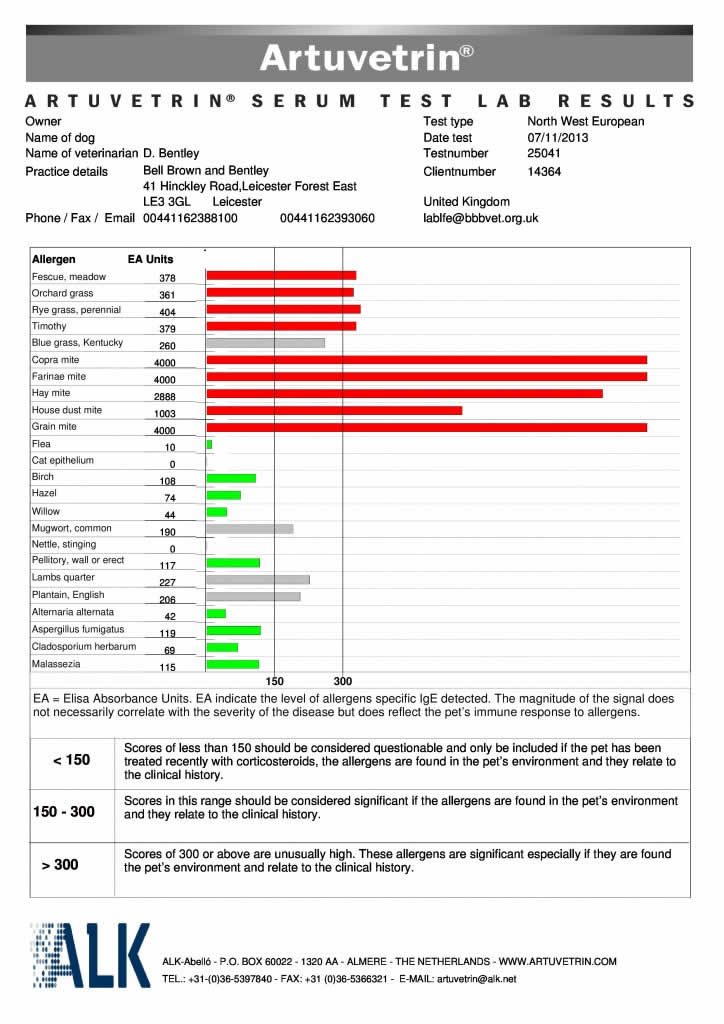
Image Source: leicesterskinvet.co.uk
How To Read Dog Allergy Test Results: A Simple Guide
Many dog owners ask, “What is a dog allergy test?” or “Can I tell if my dog has allergies?” Yes, you can. Dog allergy tests look for things your dog’s body reacts to. They help vets find out what makes your dog itch, sneeze, or have skin issues. This guide will help you learn how to read dog allergy test results and what they mean for your furry friend. We will make it easy to grasp your canine allergy test report explanation and what to do next.
Why Dogs Need Allergy Tests
Dogs can get allergies just like people. These allergies can make them feel very bad. Your dog might scratch a lot. They might bite their paws. Their skin could get red or sore. Some dogs get ear infections often. Others might sneeze or have runny eyes. These signs mean your dog might be allergic to something.
Allergies happen when your dog’s body sees a harmless thing as a threat. Their immune system overreacts. This causes the bad signs you see. Finding what causes these reactions is the first step to helping your dog feel better. Allergy tests are a key part of this process. They help you and your vet make a plan to ease your dog’s discomfort.
Kinds of Dog Allergy Tests
There are a few ways vets test for dog allergies. Each test works in a different way.
Skin Patch Tests
This test is often called an intradermal test. A vet shaves a small patch of fur from your dog’s side. Then, they inject tiny amounts of common allergens under the skin. Allergens are things that cause allergies. These can be pollens, molds, or dust mites. The vet watches the skin for a short time. If your dog is allergic, a small bump or redness will show up where the allergen was put. This test shows a direct skin reaction. It is often done by a vet who specializes in skin problems.
Blood Tests (Serum Allergy Tests)
Blood tests are very common. They are also called serum allergy tests. For this test, your vet takes a small blood sample from your dog. This sample is sent to a special lab. The lab checks the blood for certain proteins. These proteins are called antibodies. A key antibody they look for is IgE. Dog IgE levels explained tell you how much of this protein is in your dog’s blood. High levels of IgE can mean your dog is allergic. This test is easy to do. It does not need your dog to be sedated. It can check for many different allergens at once.
Food Elimination Trials
This is not a lab test. But it is the best way to find food allergies. Your vet will ask you to feed your dog a very strict diet. This diet uses new protein and carb sources. These are foods your dog has never eaten before. You feed only this new diet for 8 to 12 weeks. No treats, no table scraps. After this time, you slowly add back old foods. You watch for signs of allergy. If symptoms come back when you add a food, that food is likely the cause. Dog food allergy test interpretation from this method is very clear. It helps pinpoint the exact food.
Reading Your Dog Allergy Test Report
When you get your test results, they might look like a puzzle. But don’t worry. We will break it down. Dog allergy test interpretation is easier than it seems with a bit of help. Your canine allergy test report explanation will usually list many different allergens. It will show how your dog reacted to each one.
Grasping the Basics: What the Report Shows
Most reports will have a list of things your dog was tested for. These often include:
* Tree pollens: Oak, birch, maple.
* Grass pollens: Timothy, bermuda, rye.
* Weed pollens: Ragweed, plantain.
* Molds: Aspergillus, Penicillium.
* House dust mites: Dermatophagoides farinae, Dermatophagoides pteronyssinus.
* Insect allergens: Fleas, dust mites.
* Common food items: Chicken, beef, dairy, wheat, soy.
Next to each allergen, you will see a number or a score. This number tells you how strong your dog’s reaction was.
What Dog Allergy Test Numbers Mean
The numbers on your report are key. They show how much your dog’s body reacts to each allergen.
* Low numbers or scores: These often mean your dog is not allergic to that item. Or, they have a very mild reaction.
* Medium numbers or scores: These might mean your dog is mildly allergic. Or they could become more allergic later.
* High numbers or scores: These mean your dog has a strong reaction. This allergen is likely causing their symptoms.
Some labs use a scale, like 0 to 6. Zero means no reaction. Six means a very strong reaction. Other labs might use words like “Negative,” “Low,” “Moderate,” or “High.” Always look for the guide on your report. It will explain their specific scale. This makes what dog allergy test numbers mean clear for your specific report.
Positive Dog Allergy Test Meaning
A positive dog allergy test meaning is simple: your dog’s body reacted to that allergen. This means that item might be causing their allergies.
* For blood tests: A positive result means high IgE levels were found for that allergen.
* For skin tests: A positive result means a raised bump or redness appeared at that spot.
A positive test result does not always mean that specific allergen is the only problem. Dogs can be allergic to many things. It also does not mean your dog will show symptoms from it. It just means their body has a reaction. Your vet will look at these results along with your dog’s symptoms. This helps them form a complete picture.
Negative Dog Allergy Test Implications
A negative dog allergy test implications are also important. It means your dog’s body did not react to that specific allergen.
* For blood tests: Low IgE levels for that allergen.
* For skin tests: No bump or redness appeared.
A negative result suggests that allergen is likely not causing your dog’s issues. However, a negative result does not rule out all allergies. Your dog might be allergic to something not on the test panel. Or, the test might have a false negative. This means the test did not find an allergy that is really there. This is why looking at your dog’s symptoms is so important.
Scrutinizing the Canine Allergy Panel Breakdown
A canine allergy panel breakdown often lists many different groups of allergens. It’s helpful to know what each group means.
| Allergen Category | Common Examples | What a Positive Result Suggests |
|---|---|---|
| Environmental Pollens | Grass, tree, weed pollens | Seasonal allergies (spring, summer, fall). |
| Molds & Fungi | Indoor and outdoor molds | Allergies active year-round or in damp conditions. |
| House Dust Mites | Common household mites | Year-round indoor allergies. Symptoms worse indoors. |
| Insect Allergens | Fleas, storage mites | Reaction to insect bites (flea allergy dermatitis). |
| Animal Danders | Cat dander, human dander | Reactions to other animals or people in the home. |
| Food Items | Chicken, beef, dairy, wheat, soy, corn, eggs | Food sensitivity or allergy requiring diet change. |
This table helps you see common items in an environmental allergy test results dogs section and what they might mean. It also includes food items.
Interpreting Food Allergy Test Results
Dog food allergy test interpretation is a bit different. Blood tests for food allergies are often less reliable than blood tests for environmental allergies. Many vets use food elimination trials as the ‘gold standard.’ This means they trust the strict diet plan more than a blood test for food issues.
How Food Tests Work
If your vet uses a blood test for food allergies:
* The report will list common food items (e.g., chicken, beef, dairy, wheat, soy).
* It will show a score or level for each food. This score is often based on IgE levels, or sometimes IgG or IgA antibodies.
* A high score means your dog reacted to that food in the test.
What a Positive Food Test Means (and Doesn’t Mean)
A positive result on a food allergy blood test suggests your dog might be allergic to that food. But it’s not a sure thing.
* Some dogs can have a high IgE level to a food but never show symptoms when they eat it.
* Some dogs with food allergies might have low IgE levels in the blood test.
This is why food elimination trials are so important. They confirm if a food truly causes a problem. If your dog shows symptoms when they eat chicken, and the test is positive for chicken, then it’s a strong hint. If the test is positive but your dog has no symptoms with chicken, it might not be a real allergy.
Deciphering Environmental Allergy Test Results
Environmental allergy test results dogs are often more clear with blood or skin tests. These tests look for reactions to things in your dog’s surroundings.
Pollens, Molds, and Dust Mites
These are common environmental allergens.
* Pollens: If your dog reacts to pollens (grass, tree, weed), their allergies might be seasonal. They will get itchy when those plants are active.
* Molds: Reactions to molds can mean allergies are worse in damp places or times of year. Some molds are year-round problems.
* Dust Mites: If your dog reacts strongly to house dust mites, their allergies are likely year-round. They will probably be worse indoors. This means controlling dust in your home is key.
Putting It All Together: Your Pet Allergy Results
Understanding pet allergy results means looking at the whole picture. Don’t just focus on one number.
1. Look at the overall pattern: Are there many high reactions in one group, like pollens? Or is it a mix?
2. Match results to symptoms: Does your dog get itchy in spring (pollen season) and the test shows high pollen reactions? This is a strong match. If your dog is always itchy, year-round dust mite reactions fit.
3. Consider the type of test: Remember, food blood tests are often less reliable than elimination trials. Environmental blood and skin tests are usually quite helpful.
4. Talk to your vet: Your vet has the best knowledge of your dog’s health. They will help you make sense of the report. They will also guide you on the next steps.
Next Steps After Getting Results
Getting the test results is just the start. Now, you can make a plan to help your dog.
1. Avoidance
The first step is to try and avoid the things your dog is allergic to.
* Food allergies: If a food trial confirms an allergy, strictly avoid that food. Look at all food labels.
* Environmental allergies:
* Pollen: Try to walk your dog early in the morning or late at night when pollen counts are lower. Wipe your dog’s paws and coat after walks. Keep windows closed during high pollen times.
* Dust mites: Wash dog beds often in hot water. Use HEPA air filters. Dust and vacuum regularly.
* Molds: Fix any damp spots in your home. Use dehumidifiers.
2. Medication and Treatments
Your vet might suggest medicines to ease your dog’s symptoms.
* Antihistamines: These can help with mild itching.
* Steroids: These are strong anti-itch medicines. They work fast but have side effects with long-term use.
* Apoquel or Cytopoint: These are newer, targeted drugs. They work well for itching with fewer side effects than steroids.
* Medicated shampoos and sprays: These can help soothe irritated skin and remove allergens from the coat.
3. Allergy Shots (Immunotherapy)
This is a long-term solution for environmental allergies. It is often called allergy desensitization.
* Your vet will get a custom vaccine made for your dog. This vaccine contains tiny amounts of the things your dog is allergic to.
* You give your dog shots at home, usually once a week or every few weeks.
* Over time, your dog’s body learns to ignore these allergens. Their immune system stops overreacting.
* Immunotherapy does not cure allergies, but it can greatly reduce symptoms. It works best for 60-80% of dogs. It can take 6-12 months to see full results.
4. Diet Changes and Supplements
Even if food is not the main allergy, a good diet helps.
* Hypoallergenic diets: These special diets have very few ingredients. They can help calm a sensitive gut.
* Omega-3 fatty acids: These supplements can help skin health. They reduce inflammation.
* Probiotics: These help gut health, which can support the immune system.
Working with Your Vet: A Team Effort
Your vet is your best partner in dealing with your dog’s allergies.
* Share all symptoms: Tell your vet everything you see. This helps them connect the dots.
* Bring the report: Make sure your vet has the full allergy test report.
* Ask questions: Don’t be afraid to ask about understanding pet allergy results or any part of the plan.
* Follow their advice: Stick to the treatment plan. Give medicines as told. Follow diet changes strictly.
* Be patient: Treating allergies takes time. It might take a few tries to find the best plan for your dog.
Limits of Allergy Tests
It is good to know that allergy tests are tools, not magic wands.
* False positives/negatives: Sometimes a test result might be wrong. A test might say your dog is allergic when they are not (false positive). Or it might miss an allergy (false negative). This is why vets always combine test results with your dog’s real-life symptoms.
* Not all allergens tested: Tests cover many common allergens. But it is impossible to test for everything. Your dog might be allergic to something rare that is not on the panel.
* They don’t diagnose “food intolerance”: Tests usually look for true allergic reactions. Food intolerance is different. It causes digestive upset, but it is not an immune system allergy. Tests don’t find these issues.
* They don’t tell you the severity: A high number on a test does not mean your dog’s symptoms will be worse than a dog with lower numbers. The test only shows the body’s reaction, not how bad the clinical signs will be.
Frequently Asked Questions (FAQ)
How long does it take to get dog allergy test results?
It usually takes 1 to 3 weeks to get blood test results back from the lab. Skin tests are read right away by the vet doing the test.
Can dog allergy tests be wrong?
Yes, they can sometimes be wrong. No test is 100% perfect. This is why your vet will always look at the test results along with your dog’s symptoms. This helps make the right diagnosis.
Do I need to stop allergy medicine before a blood test?
For blood tests, you usually do not need to stop medicines. But always ask your vet. Some skin tests do need you to stop certain medicines before the test.
What is the best test for dog allergies?
The “best” test depends on the type of allergy. For environmental allergies, both blood tests and skin tests are good. For food allergies, a strict food elimination trial is considered the most reliable method. Your vet will pick the best test for your dog.
Can dogs grow out of allergies?
It is very rare for dogs to completely outgrow allergies. Most allergies are lifelong. However, symptoms can often be managed very well with proper care and treatment. Some dogs might see their allergies lessen over time with immunotherapy.
How much do dog allergy tests cost?
The cost varies. It depends on the type of test, your vet’s location, and the lab used. Blood tests can range from $200 to $400 or more. Skin tests, which need a specialist, can be more expensive, sometimes $500 to $1,000. It’s best to ask your vet for an exact quote.
What does IgE mean in dog allergy tests?
IgE stands for Immunoglobulin E. It is a type of antibody, a protein made by the immune system. When your dog is exposed to something it’s allergic to, its body makes more IgE antibodies specific to that thing. High IgE levels for a specific allergen suggest an allergic reaction. This is what dog IgE levels explained focuses on.
Can dog allergy tests tell me if my dog has a gluten allergy?
Some food allergy panels include wheat or gluten. A positive result for wheat might suggest a sensitivity. But again, a food elimination trial is the best way to confirm a gluten or wheat allergy.
Knowing how to read dog allergy test results is a powerful step. It helps you work with your vet. Together, you can find the best ways to help your dog live a happy, itch-free life.