
Many dog owners ask, “Can dogs be prejudiced?” or “Do dogs recognize ethnicity?” The direct answer is no. Dogs do not have the ability to be racist or prejudiced in the way humans are. They do not understand race or ethnicity. Their reactions to people, whether good or bad, come from different reasons. These reasons include their past experiences, their training, how much they were around different people as puppies, and even how people act around them. A dog’s dislike for certain people is not about skin color or origin. It is about smells, sounds, movements, and how safe they feel.
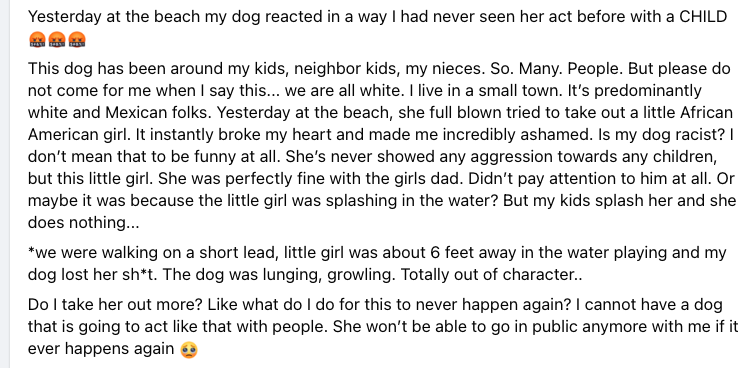
Image Source: poochparenting.net
What is Racism?
Racism is a human idea. It means believing one human race is better than another. It often leads to hate, unfair treatment, and harm. Racism is based on complex social, historical, and cultural ideas. It needs complex thoughts and beliefs about groups of people. Dogs cannot have such thoughts. They do not think about human races or groups. They react to things they sense directly.
Can Dogs Be Prejudiced?
No, dogs cannot be prejudiced. Prejudice is a human thought. It means having a strong dislike for someone based on their group, not their actions. Dogs react to what they learn. They do not form biases based on race or ethnicity. Their brains work differently. They cannot understand complex social ideas like prejudice. They live in the moment. They learn from what happens around them. If a dog reacts badly to a person, it is often due to:
- Fear: They might be scared of something new or different.
- Lack of exposure: They have not met many different kinds of people.
- Bad past events: Someone who looked or acted a certain way might have hurt them.
- Owner’s actions: How their owner acts can make a dog feel safe or unsafe.
Do Dogs Recognize Ethnicity?
Dogs do not recognize ethnicity. They do not see people as “white,” “black,” “Asian,” or any other ethnic group. Dogs use their senses to learn about the world. They rely mostly on smell. They also use sight and sound.
- Smell: Each person has a unique smell. Dogs learn to tell people apart by their scent. They can smell fear, sickness, and even hormones.
- Sight: Dogs see shapes, sizes, and movements. They notice how people walk, how tall they are, and what clothes they wear. They might notice big hats or long coats. These things can make a person look different or scary.
- Sound: Dogs hear voices. They can tell a deep voice from a high one. They notice loud noises or sudden sounds.
A dog reacting to a person is not about their ethnicity. It is about how that person smells, moves, or sounds. It is about what the dog has learned about similar smells, movements, or sounds.
Why Dogs React to Different People
Many things can make a dog react to a person. These reactions are not based on human race. They are based on a dog’s world.
Dog Fear of Strangers
A dog’s fear of strangers is common. This fear often leads to barking, growling, or hiding. It is a main reason dogs react badly to people.
- Lack of Early Socialization: Dogs need to meet many people when they are young. This includes people of all ages, sizes, and looks. If a dog does not get this chance, new people can seem scary. They did not learn that different people are okay.
- Bad Past Experiences: A dog might have met a stranger who was mean. Maybe someone kicked them. Or yelled at them. The dog might link that bad event to how that person looked. This can cause the dog to fear all people who look similar.
- Genetic Factors: Some dogs are just more timid. Their genes can make them more likely to be scared. This is true even if they had good training.
- Learned Fear from Owner: Dogs can pick up on their owner’s fear. If an owner is nervous around strangers, the dog might feel that fear. This can make the dog nervous too.
Dog Aggression Towards Certain People
When a dog shows aggression towards certain people, it is usually a sign of fear. It can also be about feeling territorial. Dogs are not aggressive based on race. They might be aggressive due to:
- Specific Features: A dog might react to a man with a beard. Or a woman with a hat. Not because of their gender or what they wear, but because it is new. Or because someone with a beard once hurt them. The dog does not know why that person hurt them. They only remember the beard.
- Unusual Movements: People who move fast or have a different walk might scare a dog. A person using a cane or a wheelchair might move in a way a dog does not know. This can seem like a threat.
- Deep Voices or Loud Noises: A dog might be scared of a deep voice. Or a loud laugh. This is not about the person’s race. It is about the sound.
- Uniforms: Mail carriers, delivery people, or police officers wear uniforms. Dogs often react to these people. This is because they link the uniform to a quick visit or a loud sound at the door. It is not about the person’s identity. It is about their job and what comes with it.
Dog Barking at Specific Appearances
Dogs often bark at things that seem new or out of place. This includes certain appearances.
- Tall People: A very tall person might seem large and scary to a small dog.
- People with Hats or Hoods: These can hide a person’s face. This makes it hard for the dog to read their expressions. Dogs rely on faces to know if someone is friendly.
- People with Beards or Glasses: These change a person’s outline. A dog might see them as a new shape. If they have not met many people with beards, it can seem strange.
- Body Covering Clothes: Long coats, scarves, or baggy clothes can change a person’s look. It can hide their body shape. This can make a dog feel unsure.
The dog barks because these things are not typical. They are not what the dog sees every day. The barking is often a “stay away” signal. Or a “what are you?” question.
Why Dogs Dislike Some Strangers
Dogs can dislike some strangers for many reasons. These reasons are not tied to human race. They are about how the stranger acts.
- A Dog’s Personal Space: Some people move too fast into a dog’s space. They might try to pet the dog without warning. This can make a dog feel trapped or scared.
- Direct Stares: Humans often make eye contact when greeting. But a direct stare can feel like a threat to a dog. A dog might dislike someone who stares too much.
- Strange Scents: A stranger might wear a strong perfume. Or smell like another animal. These new smells can make a dog nervous.
- Loud Noises or Fast Movements: Dogs can be sensitive to noise. A loud voice or quick move can scare them. They might dislike someone who is too loud or too sudden.
- Body Language of Unfamiliar People: A dog reads body language well. They notice if a person is stiff, nervous, or too eager. If a person seems unsure, the dog might feel unsure too.
- Leaning over the dog: This can feel very threatening.
- Reaching quickly: A fast hand coming towards a dog can make them flinch.
- Ignoring the dog’s signals: If a dog turns its head away, it means “no thanks.” If a person keeps trying to pet them, the dog might dislike them.
Dog Body Language Unfamiliar People
Dogs use their own body language to tell us how they feel. They also try to read ours. When they meet unfamiliar people, they look for clues.
- Relaxed and Calm: A dog will feel better around a person who is calm. Someone who moves slowly and speaks softly.
- Stiff or Threatening: If a person stands very straight or stares, a dog might see this as a challenge.
- Avoidance Signals: A dog might lick its lips, yawn, or turn its head away. These are signs of stress. If a person does not notice these, the dog might feel unsafe.
- Tail Wags: Not all tail wags mean happy. A stiff, fast wag can mean the dog is tense. A low, slow wag often means fear.
- Eye Contact: Too much direct eye contact can be threatening to a dog.
- Crouching or Kneeling: Getting down to a dog’s level can seem less scary. But some dogs might still feel unsure.
Dogs react to these cues. They are not reacting to a person’s ethnicity. They are reacting to their actions and posture.
Dog Past Negative Experiences with People
This is a big factor in a dog’s reactions. If a dog had a bad experience, they remember it.
- Specific Features Linked to Pain: A dog might have been hurt by a man with glasses. Now, all men with glasses might seem scary. It is not about men or glasses in general. It is about that one bad memory. The dog links the pain to what they saw.
- Abuse or Neglect: Dogs rescued from abuse often have deep fears. They might fear men, women, or loud noises. This fear is not tied to race. It is tied to the trauma they went through.
- Lack of Positive Exposure: If a dog only met one type of person in a bad way, they might fear that type. For example, a dog who only met children who were rough might fear all children.
A table can help show how a dog perceives things versus a human’s view:
| Feature/Action | Human Perception (can lead to racism) | Dog Perception (no racism) |
|---|---|---|
| Skin Color | Marks a “race” or “ethnicity” group. | Does not compute as “race.” Part of overall visual cue. |
| Physical Appearance (e.g., beard, uniform, height) | Can be linked to groups or stereotypes. | Part of the visual ‘shape’ or ‘costume’ of an individual. Can trigger fear if linked to past bad events. |
| Voice Tone/Accent | Can be linked to origin or group. | Loudness, pitch, perceived aggression/friendliness. |
| Body Language/Movement | Can be interpreted as culturally specific. | Read as direct signals of intent (threat, play, calm). |
| Smell | Not usually a marker for human racism. | Key identifier. Each person has a unique scent. |
| Past Experiences | Can lead to prejudice/racism if generalized by groups. | Specific to the individual dog’s memory of a person or a person’s specific features (e.g., “the man with the hat who yelled”). |
| Social Context | Crucial for racism (power, history). | Not understood by dogs. Reacts to immediate sensory input. |
The Role of Socialization
Proper socialization is the best way to help a dog be calm around all kinds of people. It teaches them that new things are safe.
Dog Socialization Problems
Many unwanted behaviors stem from socialization problems.
- Limited Exposure: A puppy kept only with its family will be scared of new people. It will not know how to act. It did not learn that others are okay.
- Negative First Events: If a dog’s first few meetings with strangers are scary, they will learn to fear strangers.
- No Chance to Learn: Socialization is not just meeting people. It is about positive meetings. It means learning how to be calm in new places. It means learning to trust.
- Breeder Influence: Some breeders do not socialize puppies enough. This can lead to shy or fearful adult dogs.
Importance of Early and Ongoing Socialization
Socialization must start early. It needs to keep going throughout a dog’s life.
- Puppyhood (3-16 weeks): This is a key time. Puppies should meet many people. They should visit many safe places. This builds a strong base for being calm.
- Adult Dogs: Socialization should not stop. Keep meeting new people. Keep going to new, safe places. This helps dogs stay calm and well-adjusted.
- Positive Events: Every meeting should be good. Give treats. Give praise. Let the dog approach when ready. Never force a dog to meet someone.
Exposure to Diverse Groups
To help your dog feel safe around everyone, you must expose them to diverse groups. This means different kinds of people.
- Age: Introduce your dog to babies, children, teens, adults, and older people. Each age group moves and sounds differently.
- Gender: Dogs should meet both men and women. Sometimes dogs fear one gender more. This is often due to past events.
- Appearance: Let your dog meet people with different looks. People with glasses, hats, beards, or scarves. People of different sizes and shapes.
- Movement: Expose your dog to people who move differently. People using wheelchairs, canes, or walking aids. People who run or walk slowly.
- Sound: Let your dog hear different voices. Deep voices, high voices, loud voices, soft voices.
- Clothing: Meet people in uniforms, costumes, or just everyday clothes.
Make every meeting a good one. Give treats. Let the dog set the pace. This helps your dog interpret dog reactions to diverse groups as normal. They learn that different is okay. They learn that people who look different are not a threat.
Correcting Problem Behaviors
If your dog already shows fear or aggression, you can help them. It takes time and patience.
Behavior Modification Techniques
These methods help change a dog’s reaction to scary things.
- Positive Reinforcement: Reward calm behavior. When your dog sees a person they fear, and stays calm, give them a treat. This teaches them that calm equals good things.
- Desensitization: Slowly get your dog used to the scary thing. Start far away. Keep the person far enough that your dog stays calm. Give treats. Slowly get closer over many sessions.
- Counter-Conditioning: Change your dog’s feelings about the scary thing. If your dog fears men with beards, every time they see one, give them a super tasty treat. Over time, the beard becomes a sign that yummy treats are coming. Not a sign of danger.
- No Punishment: Never punish fear or aggression. This will only make your dog more scared. It teaches them to hide their fear. This can lead to sudden bites.
Seeking Professional Help
Sometimes, you need help from an expert.
- Certified Professional Dog Trainer (CPDT): A good trainer can guide you. They can teach you how to use positive methods. They can help you make a plan.
- Certified Applied Animal Behaviorist (CAAB) or Veterinary Behaviorist (DACVB): For strong fear or aggression, see a behaviorist. They are like dog psychologists. They can find the root cause. They can give medicine if needed.
Preventing Future Issues
Once your dog is doing better, keep up the good work. Prevention is key.
Continuing Socialization
Socialization is not a one-time thing. It is a lifelong process.
- Regular Outings: Keep taking your dog to new places. Go to dog-friendly parks. Visit pet stores.
- Meet New People: Encourage your dog to meet new people often. Make sure these meetings are always positive.
- Vary the Routine: Do not always go to the same places. Do not always meet the same people. Keep things fresh. This helps your dog stay flexible.
Reading Your Dog’s Signals
Learn your dog’s body language. This helps you know how they feel.
- Signs of Stress: Watch for lip licking, yawning, panting when not hot, whale eye (showing the whites of their eyes), tucked tail, flattened ears.
- Signs of Fear: Trembling, hiding, trying to get away, freezing, growling, barking.
- Respect Their Space: If your dog shows stress, do not force them. Give them space. Move them away from the stressful thing.
Creating Positive Associations
Always aim for good feelings.
- Treats and Praise: When your dog meets someone new calmly, give a high-value treat and praise.
- Fun Activities: If your dog is nervous in new places, make it fun. Play games. Give puzzles. This makes the place feel safe.
- Slow Introductions: Let your dog approach people on their own terms. Never rush them.
Dogs are wonderful creatures. They do not have the bad human trait of racism. Their reactions are about safety, fear, and learning. By giving them good training, lots of socialization, and a safe home, we can help them be calm and happy around everyone.
Frequently Asked Questions (FAQ)
Is it normal for a dog to bark at specific appearances?
Yes, it can be normal for a dog to bark at specific appearances. This is often because the appearance is new or unusual to the dog. It might be a person with a big hat, a uniform, or who moves in a strange way. The dog is reacting to the new sight, not the person’s race.
Can a dog learn to like new people if it is fearful?
Yes, a dog can learn to like new people even if it is fearful. It takes time, patience, and the right training methods. Using positive reinforcement, slow introductions, and desensitization can help. Sometimes, professional help from a trainer or behaviorist is needed.
What if my dog only barks at men?
If your dog only barks at men, it often means they had a bad experience with a man in the past. Or they did not meet many men when they were young. It is not about gender in a human sense. It is about their learned fear. You can help them by slowly introducing them to many calm men, always with treats and positive feelings.
Why do some dogs seem to “hate” the mailman?
Dogs often “hate” the mailman for several reasons. It is not personal. The mailman comes to their territory (the house) every day. They leave quickly. They might wear a uniform. The dog sees them as an intruder. Barking at them often makes the mailman leave. This makes the dog think their barking works. It becomes a learned behavior.
How can I introduce my dog to someone new safely?
Introduce your dog to someone new safely by:
1. Ask the person to ignore the dog at first. No staring or reaching.
2. Let the dog approach them. Do not force it.
3. Have the person toss treats. This makes the meeting positive.
4. Keep the first meeting short. End on a good note.
5. Watch your dog’s body language. If they show stress, create more space.