
Stop Smells: How To Clean Up Dog Poop From Carpet Fast
Getting dog mess out of carpet can feel like a big problem, but you can clean it up. To clean up dog poop from carpet, act fast to remove the solid waste, treat the spot with a suitable cleaner like an enzymatic one, and blot away the mess. How to remove dog poop smell from carpet often requires using an enzymatic cleaner or a baking soda treatment to break down the odor molecules. You can clean fresh dog poop from carpet by gently picking up the bulk of it and then treating the area quickly. Cleaning dried dog poop off carpet takes a bit more work, often needing you to moisten it first before carefully removing it.
Dealing with dog messes is part of having a furry friend. When accidents happen on your carpet, time is important. The faster you act, the better chance you have to stop stains and bad smells. This guide tells you how to tackle dog poop on carpet, whether it’s a fresh pile or a dried-on mess. We will help you get your carpet clean and smelling fresh again.
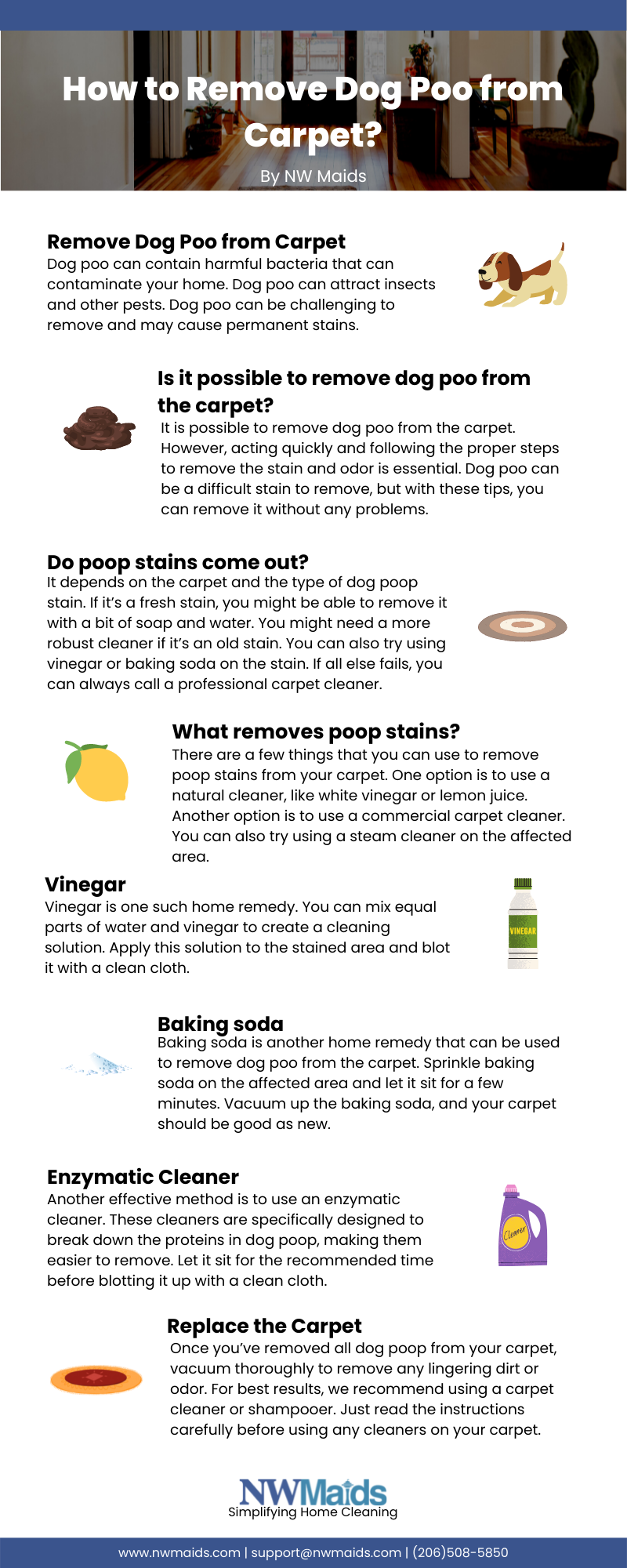
Image Source: nwmaids.com
Getting Ready for the Clean Up
Before you start cleaning, get all your supplies together. This makes the job faster and easier. You don’t want to be running around looking for things while the mess sits there.
What You Need
Having the right tools helps a lot. Here are things you should have ready:
- Rubber gloves (to protect your hands)
- Paper towels or old clean cloths (lots of them!)
- Plastic bags (for scooping and throwing away the mess)
- A flat tool like a spatula or a stiff piece of cardboard
- A good cleaning solution (more on this soon)
- A spray bottle (if your cleaner isn’t already in one)
- An old toothbrush or soft brush (sometimes needed)
- Baking soda (great for smells)
- Vacuum cleaner
Cleaning Fresh Dog Poop from Carpet
Fresh messes are easier to deal with than old, dried ones. The key is to be gentle and work quickly. Don’t rub the mess in!
Step-by-Step for Fresh Messes
Follow these steps carefully to clean fresh dog poop from carpet:
- Step 1: Act Right Away. The very first thing to do is start cleaning as soon as you see the mess.
- Step 2: Put on Gloves. Protect your hands from germs.
- Step 3: Scoop the Poop. Use your spatula, cardboard, or several thick layers of paper towels to carefully scoop up the solid poop. Try to get all the chunks without pushing down or spreading the mess. Put the scooped poop right into a plastic bag.
- Step 4: Seal and Dispose. Tie the plastic bag tightly and take it outside to your trash can right away. You don’t want the smell in your house.
- Step 5: Blot the Spot. Now, use clean paper towels or a clean cloth to blot the area. Press down to soak up any liquid or soft bits left on the carpet fibers. Start from the outside of the mess and work your way in. This stops the stain from spreading. Keep blotting with fresh paper towels until you can’t get any more moisture up.
- Step 6: Apply Cleaner. Now it’s time for your cleaning solution. A pet stain remover for carpet is often best. We will talk more about specific cleaners later. Spray or pour a small amount of the cleaner onto the soiled area. Don’t soak the carpet, just make it damp.
- Step 7: Let the Cleaner Work. Most cleaners, especially enzymatic ones, need time to do their job. Read the bottle instructions. It might say to wait 5, 10, or 15 minutes.
- Step 8: Blot Again. After the waiting time, use fresh paper towels or a clean cloth to blot the area again. Press down to lift the cleaner and the mess it’s breaking down out of the carpet. Again, work from the outside in. You should see the mess transferring from the carpet to the paper towel. Keep blotting until the paper towel comes up clean.
- Step 9: Rinse (Optional). If your cleaner says to rinse, lightly mist the area with clean water from a spray bottle. Then blot thoroughly with dry paper towels to get all the water out. Getting the water out is important so you don’t get mold or mildew.
- Step 10: Dry the Area. Put a thick layer of paper towels or a clean towel over the spot. Put something heavy on top, like a stack of books or a brick wrapped in plastic. This helps soak up more moisture as the spot dries. Leave it there for a few hours or even overnight.
- Step 11: Vacuum. Once the area is completely dry, vacuum it gently. This helps lift the carpet fibers and makes the area look normal again.
Why Blotting is Key
When you are dealing with fresh dog mess, never rub. Rubbing pushes the poop deeper into the carpet fibers and spreads the stain and the smell. Blotting, on the other hand, lifts the mess out of the carpet. Think of it like dabbing with a sponge. You are picking the mess up, not pushing it around. This is a crucial step in dog poop stain removal from carpet.
Cleaning Dried Dog Poop Off Carpet
Sometimes you don’t find the accident right away, and it dries onto the carpet. This is harder to clean, but not impossible. You need to be patient.
Steps for Dried Messes
Cleaning dried dog poop off carpet needs a slightly different approach:
- Step 1: Scrape Gently. Put on your gloves. Use a stiff brush, a spoon, or a dull knife to gently scrape off as much of the dried poop as you can. Work carefully to avoid damaging the carpet fibers. Collect the scraped bits onto paper towels and put them in a plastic bag.
- Step 2: Vacuum Up Loose Bits. Once you’ve scraped off the top layer, gently vacuum up the small, dry pieces that are left. Be careful not to press the vacuum head hard onto the spot, especially if some parts are still stuck.
- Step 3: Rehydrate the Spot. The dried mess is stuck. You need to make it wet again so the cleaner can work. Lightly spray the area with warm water or your cleaning solution. Just make it damp, not soaking wet. Let it sit for a few minutes to soften the dried poop.
- Step 4: Apply Cleaner. Apply a pet stain remover for carpet to the area. Make sure the cleaner is made for pet stains, as these are best at breaking down the specific stuff in dog mess. Enzymatic cleaners are very good for dried stains and smells.
- Step 5: Let the Cleaner Work (Longer). Dried messes need more time. Let the cleaner sit for the time suggested on the bottle. For tough, dried stains, you might even need to cover the area with a damp cloth (soaked in cleaner or water) for an hour or two. This helps keep the spot wet so the cleaner keeps working.
- Step 6: Blot and Repeat. After the cleaner has had time, blot the area firmly with clean paper towels. You are trying to lift the rehydrated mess out. You will probably need to repeat steps 3-6 several times. Spray cleaner, let it sit, blot. Do this until you are lifting less and less mess.
- Step 7: Use a Brush (Carefully). For stubborn bits, you might need to use a soft brush (like an old toothbrush) to gently work the cleaner into the fibers. Brush lightly, don’t scrub hard, as this can damage the carpet. After brushing, blot again right away.
- Step 8: Rinse and Dry. Once the stain is mostly gone, lightly rinse with water if needed and blot thoroughly. Then set up your heavy item and paper towels to help the area dry completely.
- Step 9: Vacuum. When it’s totally dry, vacuum the area.
Cleaning dried dog poop off carpet takes patience. Don’t get discouraged if it doesn’t come up perfectly the first time. Repeat cleaning might be needed.
Choosing the Right Cleaner
The cleaner you use is very important, especially for getting dog mess out of carpet completely and removing the smell. Not all cleaners are the same.
Enzymatic Cleaners Explained
One of the best types of cleaners for dog accidents is an enzymatic cleaner for dog poop on carpet.
- What are Enzymes? Enzymes are like tiny workers. In these cleaners, they are special proteins that break down the stuff found in organic messes like poop, pee, and vomit.
- How They Work: Poop has things like proteins, fats, and other organic matter. Enzymes break these things down into much smaller pieces. These smaller pieces are easier to remove and, very importantly, they don’t cause the bad smells. This is key for how to remove dog poop smell from carpet. Regular soap and water might clean the surface, but they often leave the odor-causing stuff behind.
- Why They are Best for Pet Messes: Pet messes are organic. Enzymatic cleaners are specifically designed to break down these types of messes and the odors they create. They don’t just cover up the smell; they get rid of the source of the smell.
- Using Them Right: Enzymatic cleaners need time and moisture to work. You apply them, keep the area damp (sometimes covering it with a towel), and let them sit for the time recommended on the bottle – often 10-30 minutes, or even longer for tough jobs. Don’t use other cleaners or harsh chemicals first, as these can kill the enzymes.
Look for products that specifically say “enzymatic cleaner” and are made for pet stains. Using an enzymatic cleaner for dog poop on carpet is often the best way to stop the smell for good.
Other Cleaner Types
While enzymatic cleaners are top-notch, other options can help or might be used in different situations.
- General Carpet Cleaners: Some regular carpet stain removers can help with the visible stain, but they might not get rid of the odor completely. Make sure they are safe for your carpet type.
- Pet Stain Removers: Many products are simply labeled “pet stain remover for carpet.” Check if they contain enzymes. If they do, they are great. If not, they might just be good at removing the stain color but not the deep-down smell.
- Homemade Cleaners: You can make your own cleaner using simple things like vinegar or baking soda. These can help with some stains and smells, but they are often not as powerful as commercial enzymatic cleaners, especially for tough odors or old stains. We’ll look at homemade options later.
Best Carpet Cleaner for Dog Accidents
The best carpet cleaner for dog accidents usually depends on the mess.
- For fresh stains and odors: An enzymatic cleaner is highly recommended.
- For set-in stains with smell: An enzymatic cleaner is almost always necessary.
- For the initial cleanup of solids: Just paper towels and perhaps a spatula are needed. The cleaner comes after removing the bulk of the mess.
When choosing a cleaner, always read the label to make sure it’s safe for your carpet material (like wool, nylon, etc.). Test the cleaner in a small, hidden spot of the carpet first to make sure it doesn’t cause discoloration.
Removing Pet Odor from Carpet
Getting rid of the visible stain is only half the job. The smell can linger if not treated properly. Removing pet odor from carpet needs special attention.
Why Pet Odors Are Stubborn
Dog messes contain organic stuff that smells bad as it breaks down. These tiny particles get deep into the carpet fibers, the padding underneath, and even the floor. Regular cleaning might lift the surface mess, but the smell source remains hidden below.
Methods for Odor Removal
Here are effective ways how to remove dog poop smell from carpet:
- Enzymatic Cleaners (Again!): We talked about these, but they are worth mentioning again because they are the gold standard for odor removal. They break down the odor-causing molecules. Make sure you use enough cleaner to reach wherever the mess went, including into the padding if possible, and let it sit for the time instructed. Sometimes you need to use an enzymatic cleaner more than once for very bad smells.
- Baking Soda: Baking soda is a natural odor absorber. After you have cleaned the area with a liquid cleaner and it is dry or just slightly damp, sprinkle a thick layer of dry baking soda over the spot. Let it sit for several hours, or even overnight. The baking soda will soak up the smells. Then vacuum it up thoroughly. You can repeat this if needed.
- Vinegar (Carefully): White vinegar can help neutralize some odors. Mix equal parts white vinegar and water in a spray bottle. Lightly mist the cleaned area (after blotting up the main mess and cleaner). Do not soak it. Let it air dry. The vinegar smell will go away as it dries, and it should take some of the pet odor with it. However, be cautious with vinegar on some carpet types, as it is acidic. Always test in a hidden spot. Vinegar does not break down the organic matter like enzymes do, so it’s better for neutralizing smells than truly eliminating the source.
- Activated Charcoal: For ongoing odor problems in a room, placing bowls of activated charcoal nearby can help soak up smells from the air. This doesn’t clean the carpet but helps with the overall room smell.
Ensuring Smell Removal
You might think the smell is gone, but then you smell it again later, especially when it’s humid. This happens because the odor source is still there. The best way to ensure long-term odor removal is to use a good enzymatic cleaner and follow the instructions carefully, giving it enough time to work. Sometimes, a black light can show you exactly where pet messes are, even if you can’t see them easily.
Homemade Carpet Cleaner for Dog Poop
If you need a quick fix or prefer to use simple household items, you can try making a homemade carpet cleaner for dog poop. However, remember these are generally less effective than enzymatic cleaners, especially for stubborn stains and odors.
Simple Homemade Recipes
- Vinegar and Water: Mix equal parts white vinegar and water in a spray bottle. Use this after you have removed the solid poop and blotted the area. Lightly spray the spot, let it sit for a few minutes, then blot well with clean cloths or paper towels. Let the area dry completely. Test this mix first on a hidden spot.
- Baking Soda and Water Paste: For a thicker stain or odor, you can make a paste. Mix baking soda with a little bit of water until it forms a thick paste. Spread the paste over the cleaned and slightly damp stain. Let it sit for a few hours until it is completely dry and hard. The baking soda helps soak up moisture and odors. Once dry, scrape off the crust and vacuum up the powder.
- Dish Soap and Water (Use Sparingly): Mix a tiny amount of mild dish soap (like Dawn) with water. Use just one or two drops of soap per cup of water; too much soap will be hard to rinse out and can attract dirt. Use this soapy water mixture carefully on a cloth to dab at a stain after the solid mess is removed. Blot, don’t rub. Rinse by blotting with a cloth dipped in clean water, then blot dry very well. This is mostly for the visible stain, not the deep odor.
Limits of Homemade Cleaners
While these homemade options can help in a pinch, they have limits:
- Odor Control: Vinegar can neutralize some odors, and baking soda absorbs them, but they don’t break down the odor-causing molecules like enzymes do. The smell might come back, especially in humid weather.
- Stain Removal: They might help lift some color, but they are less likely to fully remove tough stains compared to commercial pet stain removers designed for these specific messes.
- Carpet Safety: Be careful with vinegar on certain natural fiber carpets (like wool). Test any homemade mix first.
For the best results on getting dog mess out of carpet, especially for smells, a commercial enzymatic cleaner is usually the most reliable option.
Specific Challenges and Tips
Sometimes the mess presents extra challenges. Here are tips for those situations.
Dealing with Different Carpet Types
Different carpets need different care.
- Wool: Wool is a natural fiber and can be sensitive. Avoid harsh chemicals, hot water (use lukewarm), and high pH cleaners (like many common household cleaners). Enzymatic cleaners made for wool are best. Blot gently; don’t rub or soak. Test any cleaner in an unseen spot first.
- Nylon and Other Synthetics (Polyester, Olefin): These are more durable and resistant to stains than wool. Most commercial pet stain removers and enzymatic cleaners are safe for them. You can use slightly warmer water if needed, but still avoid soaking the carpet.
- Shag or Long-Pile: These carpets are harder because the mess can go deep down. You need to make sure your cleaner reaches the base of the fibers and the padding. You might need to use more cleaner and blot for longer. Getting thick poop out of shag can be tough; you might need to carefully use fingers (with gloves!) or a comb after softening with cleaner.
Always check the cleaning instructions for your specific carpet type if you know it.
What Not to Do
Making mistakes can make the stain and smell worse. Avoid these things:
- Don’t Rub: This pushes the mess deeper and spreads it. Always blot.
- Don’t Use Hot Water First: Hot water can “cook” the protein in poop, setting the stain and making it harder to remove, especially before using a cleaner. Use cool or lukewarm water/cleaner initially.
- Don’t Use Ammonia: The smell of ammonia can attract dogs to pee in the same spot again, and it doesn’t effectively clean up poop or its odor source.
- Don’t Use Bleach: Bleach can damage and discolor carpet fibers. It might also not be effective against the organic compounds in poop odor.
- Don’t Over-Wet the Carpet: Too much moisture can damage the carpet backing, cause mold or mildew growth, and can be very hard to dry completely. Use enough cleaner/water to treat the mess, but don’t soak the area.
- Don’t Use Too Much Soap: Soap residues attract dirt, making the spot look dirty again quickly. If using a soapy cleaner, make sure to rinse (blot with clean water) very well.
Persistent Stains or Smells
If the stain or smell won’t go away after several tries, you might need stronger help.
- Professional Carpet Cleaning: A professional cleaner has stronger equipment and cleaners. They can often remove stains and odors that home methods can’t. Make sure they have experience with pet accidents.
- Subfloor Treatment: If the mess soaked through the carpet and padding into the floor underneath (the subfloor), the smell will stay no matter how much you clean the carpet. In bad cases, the carpet and padding might need to be lifted, the subfloor cleaned and sealed, and possibly the padding replaced. This is a last resort for very serious, repeating accidents.
Prevention is Best
Of course, stopping accidents before they happen is the best way to keep your carpets clean.
Training Your Dog
Proper house training is key. Take your dog out often, especially after waking up, after eating, and before bed. Praise them when they go outside. Learn to read your dog’s signs that they need to go out.
Crating or Supervision
When you can’t watch your dog, keep them in a safe, smaller area like a crate or a room with easy-to-clean floors. This stops accidents from happening on the carpet when you’re not around to notice.
Regular Bathroom Breaks
Stick to a regular schedule for potty breaks. This helps your dog learn when and where they should go.
Clean Up Accidents Completely
When an accident does happen, clean it thoroughly the first time. If any smell remains, your dog might be drawn back to that spot by the odor to go again. Using an enzymatic cleaner is vital for completely removing the scent marker for your dog.
Reviewing the Cleaning Process
Let’s quickly look back at the main steps for getting dog mess out of carpet:
- Step 1: Remove Solids. Scoop up the poop gently without spreading or rubbing.
- Step 2: Blot Wetness. Use paper towels or cloths to soak up any liquid from the carpet.
- Step 3: Apply Cleaner. Use a good pet stain remover for carpet, preferably an enzymatic cleaner.
- Step 4: Let Cleaner Work. Give the cleaner enough time as directed on the bottle.
- Step 5: Blot Again. Blot up the cleaner and the mess it has lifted. Repeat if needed.
- Step 6: Rinse and Dry. Lightly rinse if necessary, then blot dry completely. Use weight to help absorb moisture.
- Step 7: Address Odor. Use enzymatic cleaner or baking soda specifically for how to remove dog poop smell from carpet.
- Step 8: Vacuum. Once dry, vacuum the area.
Remember, how to clean fresh dog poop from carpet is slightly different than cleaning dried dog poop off carpet, mainly in the first few steps of removing the bulk of the mess. But the cleaning and odor removal steps are similar.
Why Enzymatic Cleaners are Often the Best Choice
To wrap up, let’s highlight again why enzymatic cleaner for dog poop on carpet is so often recommended, especially when considering removing pet odor from carpet.
They target the very things that cause the stain and the smell. While other cleaners might lift the color or cover up the odor temporarily, enzymes actually break down the organic material left behind by dog messes. This means the source of the stain and the source of the bad smell are gone, not just hidden.
Think of it like this: imagine mud on the carpet. A regular cleaner might lift the brown color. But if there were tiny, smelly things in the mud, a regular cleaner might not get them all. An enzymatic cleaner is like having tiny tools that break apart those smelly things into harmless parts.
Using the best carpet cleaner for dog accidents, which is often an enzymatic one, saves you time and frustration in the long run by fully cleaning the spot and stopping the smell from coming back.
Final Thoughts on a Clean Carpet
Dealing with dog poop on the carpet is never fun. But with the right steps, the right tools, and a bit of patience, you can clean up the mess, remove the stain, and get rid of the smell. Acting fast is important. Using the right cleaner, especially an enzymatic one, is also very important for stopping odors. Don’t forget to blot instead of rub and make sure the area dries fully. By following these steps, you can keep your carpets clean and your home smelling fresh, even with a dog.
Frequently Asked Questions (FAQ)
h4: How long does it take for an enzymatic cleaner to work on dog poop?
It usually takes 10 to 30 minutes for an enzymatic cleaner to start working well. For tough or dried messes, you might need to let it sit longer, even an hour or more, keeping the area damp. Always check the instructions on the product bottle for the best timing.
h4: Can I use my steam cleaner to clean up dog poop?
It is generally not a good idea to use a steam cleaner right away on dog poop. The heat can set the protein stain and make the smell worse, especially before the organic matter has been broken down. It’s better to remove the solid mess, treat with an enzymatic cleaner, and then you might use a steam cleaner with a pet-specific solution for a final rinse and extraction after the enzymatic cleaner has done its main job and been blotted up. Some sources even say to avoid steam cleaning altogether for pet messes initially.
h4: Will vinegar remove the smell of dog poop completely?
Vinegar can help to neutralize some odors, but it doesn’t break down the odor-causing organic molecules like an enzymatic cleaner does. It might help temporarily, but the smell could come back, especially in humid weather. For complete and permanent odor removal from pet messes, an enzymatic cleaner is much more effective.
h4: What if the dog pooped on a rug instead of wall-to-wall carpet?
If the rug is small and washable, carefully remove the solid poop, then wash the rug according to its care instructions using a detergent that is good for pet messes. For larger or non-washable rugs, follow the same steps as for wall-to-wall carpet: remove solids, blot, use an enzymatic cleaner, blot, dry, and address odor. You might be able to take a larger rug outside to clean or rinse it if the weather allows.
h4: My dog keeps having accidents in the same spot, even after I clean it. Why?
Dogs are often attracted to areas where they previously had an accident because they can still smell it. Even if you can’t smell it, your dog’s nose is much better. This is a sign that the odor source wasn’t fully removed. Using a high-quality enzymatic cleaner specifically designed for pet odors is crucial to break down those scent markers and help prevent your dog from going there again. Also, consider talking to your vet or a professional dog trainer about behavioral reasons for repeat accidents.
h4: How do I get dried poop stain out of carpet fibers?
For dried poop stain removal from carpet, the first step is to gently scrape or brush away as much of the dry material as possible. Then, you need to rehydrate the spot by lightly spraying it with warm water or a cleaner to soften it. Apply an enzymatic cleaner and let it soak into the dried mess to break it down. You may need to apply the cleaner, let it sit, and blot repeatedly. Using a soft brush to work the cleaner into the softened mess (gently!) and then blotting firmly can help lift the dried material out of the fibers. Patience is key.
h4: Is baking soda safe to use on all carpet types?
Baking soda is generally safe for most carpet types. It is a mild substance. It works by absorbing odors and can help soak up moisture. Just make sure to vacuum it up completely after you use it. Always test a small amount in a hidden spot if you are concerned.
h4: Can I use hydrogen peroxide on dog poop stains?
Hydrogen peroxide can help lift stains and kill some bacteria, but it can also lighten or bleach carpet fibers, especially on darker carpets. It’s generally not the best choice for dog poop stains compared to enzymatic cleaners which are made for this specific type of mess. If you do use it, dilute it (e.g., half water, half 3% peroxide) and test it in a hidden spot first. Never mix hydrogen peroxide with vinegar or other cleaners, as it can create harmful fumes.
h4: How can I find pet stain remover for carpet near me?
You can find pet stain remover for carpet at most grocery stores, pet supply stores, hardware stores, and online retailers. Look in the cleaning aisle, often with other carpet cleaners, or in the pet section. Brands that specialize in pet products usually carry effective enzymatic cleaners.
h4: What is the difference between getting dog mess out of carpet and just cleaning a regular stain?
Getting dog mess out of carpet is different because it involves organic material (poop) that contains specific proteins and bacteria that cause strong odors and stains. Regular stains might be from food or dirt. Pet messes require cleaners that break down these specific organic compounds, especially for odor removal. Enzymatic cleaners are made for this, while a general stain remover might only tackle the visible color.