
Many people ask, “How do I get my dog to stop barking at strangers?” Training your dog to be calm around new people is possible. It takes time and the right steps. This guide will show you how to help your dog feel okay when new people come near.
Barking at strangers is common for dogs. It can happen at home when someone visits. It can also happen on walks when someone passes by. This barking is often called reactivity. It means the dog is reacting strongly to something.
There are many reasons why dogs bark at strangers. It is key to know why your dog barks. Then you can choose the best way to help them. This post will cover different reasons for barking and how to train your dog using kind, effective methods. We will look at dog behavior modification barking. We will show you how to help your dog feel safe and calm. This will help stop dog barking at visitors and people on the street.
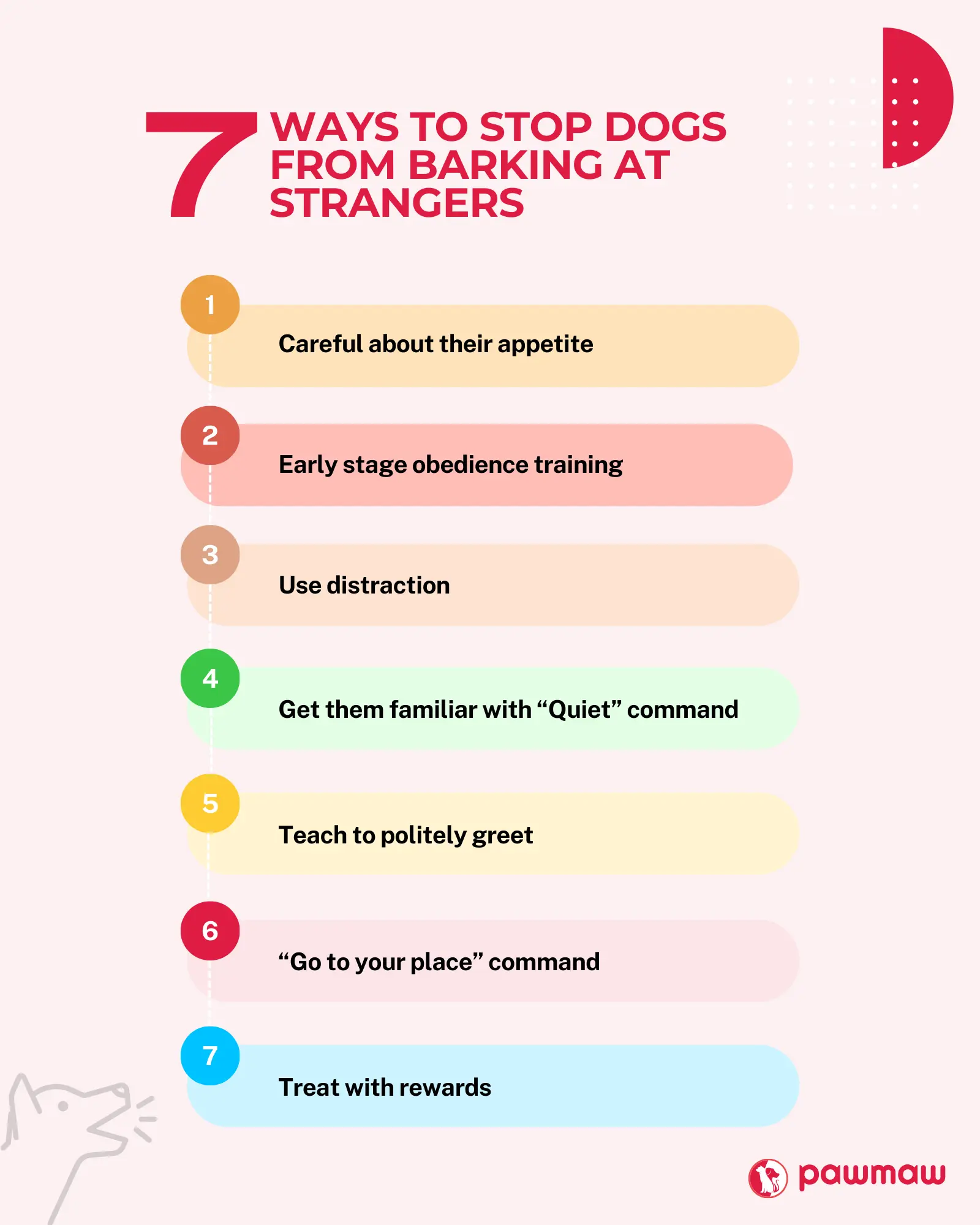
Image Source: pawmaw-images.s3.ap-southeast-1.amazonaws.com
Figuring Out Why Your Dog Barks
Dogs bark for many reasons. It is their way of talking. When they bark at strangers, they might be trying to say different things. Knowing the reason helps you fix the problem.
Different Barks Mean Different Things
- Fear Barking: The dog is scared. They might stand back. Their tail might be low or tucked. They may shake or hide. They might bark a lot and quickly. Sometimes they might lunge and then pull back. This is a sign of being unsure or afraid. Fear-based dog barking solutions focus on making the dog feel safe.
- Protective Barking: The dog feels they need to guard you or your home. They stand tall. They stare at the person. They might stand in front of you or the door. This often comes with growling. This is part of dealing with protective dog barking.
- Excitement Barking: The dog is too happy or excited. They might jump. They might wiggle their body. Their tail is often wagging fast. This happens when they want to greet the person but don’t know how to be calm.
- Lack of Socialization: The dog did not meet many different people when they were young. New people seem strange or scary to them.
- Attention Seeking: The dog learned that barking gets them noticed. Maybe barking made a person leave or get closer.
It is important to watch your dog’s body language. This tells you how they feel. Tail position, body stiffness, ear position, and how they hold their mouth are all clues.
Getting To Grips With Key Training Ideas
Training a dog not to bark at strangers uses special methods. These methods change how the dog feels about strangers. They also teach the dog what to do instead of barking. The two main ideas are desensitization and counter-conditioning. This is called desensitization counter-conditioning dog training. It is a big part of dog behavior modification barking.
What Is Desensitization?
This means making something less of a big deal. You show the dog the thing they fear (a stranger) but from far away. So far away that they do not react strongly. The goal is for the dog to see the stranger and not feel worried. You start very far away. Over time, you slowly, slowly get a tiny bit closer. But only if the dog stays calm. If the dog barks or gets worried, you are too close. You need to move back.
Think of it like a scary roller coaster. You might not want to ride it first. But maybe you can stand far away and watch it. Then maybe stand a bit closer. Then maybe touch the fence. You get used to it slowly.
What Is Counter-Conditioning?
This means changing how the dog feels about the stranger. Right now, the dog feels bad (scared, worried, too excited) when they see a stranger. We want them to feel good. We do this by giving the dog something great, like a super tasty treat, only when they see the stranger.
The dog sees a stranger (from far away). Then something good happens (they get a treat). Over time, the dog starts to think: “Oh, stranger means good things happen!” Their feeling changes from bad to good.
How They Work Together
You put desensitization and counter-conditioning together. You show the dog a stranger (desensitization). The stranger is far enough away so the dog does not bark or get scared. As soon as the dog sees the stranger, you give them a great treat (counter-conditioning). The stranger goes away, the treats stop. The stranger comes back (far away), the treats start again.
This teaches the dog two things:
1. Seeing a stranger from far away is okay. (Desensitization)
2. Seeing a stranger means good things (treats!). (Counter-conditioning)
This makes the dog feel better about strangers. It does not punish the barking. Punishing barking can make the dog more scared or just make them bark at other times. We want to change the dog’s feeling.
Getting Ready For Training
Before you start training, there are some steps you need to take. These steps help set up the dog and you for success. They also help with managing dog anxiety visitors and strangers outside.
Make Sure Your Dog Gets Enough Exercise
A tired dog is often a calmer dog. Make sure your dog gets walks, playtime, or running time before training sessions or before visitors come. This helps lower their energy and stress levels.
Learn Your Dog’s Stress Signs
Watch your dog closely. What do they do just before they bark? What do they do when they are a little worried? Signs can be:
* Lip licking
* Yawning (when not tired)
* Turning head away
* Stiff body
* Tail tucked or stiff
* Whites of eyes showing (whale eye)
* Pacing
* Shaking off (like they are wet)
Spotting these small signs early means you can act before the barking starts. This is key to success.
Get Really Good Treats
You need treats your dog loves more than anything else. Small pieces of cooked chicken, hot dogs, cheese, or special soft training treats work well. The treat must be worth more to the dog than barking or feeling scared.
Control the Situation
You need to be in control of when and how your dog sees strangers. This means:
* Using a leash and harness (not just a collar if they pull or lunge).
* Deciding how close the stranger gets.
* Having a plan for visitors.
* Using gates or separate rooms if needed.
Controlling the space and the timing is very important for desensitization.
Training Steps For Visitors At Home
Training your dog not to bark at people who come to your house is important for stop dog barking at visitors. The goal is to help your dog feel relaxed and maybe even happy when someone knocks or comes inside. This leads to calm greeting training dogs.
Step 1: Management First
Before you even start training, manage the situation.
* Put your dog in another room, like a bedroom or crate, with a fun chew toy or puzzle when visitors arrive. This keeps everyone safe and stops the barking practice.
* Use a baby gate to keep the dog away from the door area.
* Do not let your dog rush the door.
This is not the training itself, but it stops the problem from happening while you get ready.
Step 2: Find the Right Distance
Have a friend or family member act as the “stranger.”
Ask them to stand far away from your door outside.
Your dog should be inside, on a leash.
Watch your dog. Can they see the person? Are they calm? No barking? No stress signs?
If yes, that is your starting distance.
If no (they bark or show stress), the person is too close. Ask them to move further away.
Find the spot where your dog sees the person but stays calm. This might be across the street or even just outside the window view.
Step 3: Start Desensitization and Counter-Conditioning
The friend stands at the calm distance.
As soon as your dog sees the friend, give your dog a super treat.
Friend takes one step closer. Give a treat.
Friend takes another step closer. Give a treat.
Stop giving treats when the friend stops moving or goes away.
The friend moves back to the starting distance or out of sight.
Wait a minute. Repeat.
Do this for just a few minutes. Keep it short and positive.
Step 4: Getting Closer Over Time
Over many training sessions (maybe days or weeks), you slowly, slowly ask your friend to get a tiny bit closer.
Remember:
* Go at your dog’s speed. If they bark or get stressed, you went too fast. Move back.
* Keep sessions short (5-10 minutes).
* Do many sessions. Practice is key.
* Only give treats when the stranger is visible. Treats stop when they are gone. This links the stranger to good things.
Step 5: Working at the Door
Once your dog is calm seeing the friend near the door from inside, you can work on the door itself.
* Friend stands outside the closed door.
* You stand inside with your dog on leash, ready with treats.
* Friend knocks softly once.
* If dog stays quiet (or just looks but does not bark), say “Yes!” and give a treat.
* Friend knocks again. Treat if quiet.
* If dog barks, the knock stops right away. Wait for dog to be quiet, then try a softer knock or wait longer.
Slowly make the knocks louder over time.
Step 6: Opening the Door
Once the dog is calm with knocks, practice opening the door a tiny bit.
* Friend stands outside the open door, still far away.
* Dog sees friend, give treat.
* Close door, treats stop.
* Repeat. Slowly open the door wider.
* Slowly let the friend stand closer to the door opening.
Step 7: Stepping Inside
This is the hardest part.
* Friend stands outside the open door. Dog sees friend, gets treats.
* Friend takes just one step inside.
* If dog stays calm, give a lot of treats!
* Friend steps back outside. Treats stop.
* Repeat this one step in, one step out many times.
* Slowly, over many sessions, ask the friend to take two steps in, then three.
Step 8: Full Entry and Calm Greetings
The final goal is the person coming in and the dog staying calm.
* Keep practicing the steps above with different friends.
* Ask visitors in advance to help. Tell them not to look at or talk to your dog at first. This takes pressure off the dog. They should ignore the dog as they come in and for the first few minutes.
* You give your dog treats as the visitor enters and sits down.
* Once the dog is calm, the visitor can gently toss a treat to the dog (not hand-feed yet).
* Later, the visitor can try hand-feeding a treat if the dog approaches calmly.
* Never force interaction.
Table: Home Visitor Training Steps
| Step | Goal | Action | Dog Behavior | Your Response |
|---|---|---|---|---|
| 1. Management | Prevent barking practice | Use gates, separate room with chew toy when visitors arrive. | Dog is not near the door/visitor. | Ensure dog is safe & busy. |
| 2. Find Distance | Dog sees visitor, stays calm | Friend stands far outside. Dog inside on leash. Find distance with no bark. | Sees person, no barking/stress. | Note the distance. |
| 3. D+CC Start | Stranger = Good treats | Friend at calm distance. Dog sees friend -> give treat. Friend moves -> stop. | Sees person, gets treat, maybe looks away. | Give treats when person seen. |
| 4. Get Closer | More comfort with visitor closer | Slowly decrease distance over many sessions. | Stays calm as distance shrinks slowly. | Only move closer if calm. |
| 5. Door Knocks | Calm with door sounds | Friend knocks gently. Dog quiet -> treat. Knock stops if barking. | Hears knock, stays quiet or just looks. | Treat for quiet response. |
| 6. Door Opening | Calm with door open | Friend outside door, far away. Door open slightly -> treat. Close door -> stop. | Sees person through open door, stays calm. | Treat when person seen. |
| 7. Stepping Inside | Calm as visitor enters | Friend takes 1 step in. Dog calm -> many treats. Friend leaves -> stop. | Stays calm as person steps in. | Lots of treats for calm. |
| 8. Full Entry | Calm with person inside | Friend enters fully. You give treats. Visitor ignores dog at first. | Stays calm as person enters and sits. | Give treats constantly. |
| 9. Calm Greeting | Dog feels okay with visitor near | Visitor gently tosses treats. Later, hand-feeds if dog is calm & comes near. | Approaching visitor calmly for treats. | Guide visitor on interaction. |
Important: Every step must be done many, many times, maybe over weeks. Do not rush. If your dog barks, you moved too fast. Go back to an easier step.
Training Steps For Strangers On Walks
Barking at people on walks is called leash reactivity training strangers. It is also a part of dog reactivity training strangers. This often happens because the dog feels trapped by the leash. They can’t run away, so they bark or lunge to make the scary thing (the stranger) go away. The same ideas (desensitization and counter-conditioning) work here.
Step 1: Find The Safe Distance
Go for a walk in a place where you might see people, but you can control the distance. A park with wide paths or an empty parking lot can work.
Have a friend walk back and forth far away.
Walk your dog on a leash.
Find the distance where your dog sees the friend but does not bark, stare intensely, or show stress signs.
This is your starting point. It might be very far, like across a field.
Step 2: Start the “See a Stranger, Get a Treat” Game
Walk your dog. Have your friend (or just watch for strangers in real life) appear far away.
As soon as your dog sees the person, start giving treats one after another, quickly.
Keep giving treats while the person is visible.
The person passes by or moves away. Stop giving treats.
The game is: Person appears -> Treats start. Person disappears -> Treats stop.
Your dog learns that seeing a stranger makes good treats rain down! This changes how they feel about seeing people on walks.
Step 3: Practice at the Safe Distance
Walk with your dog often at the safe distance from people. Each time your dog sees a person at that distance, give treats.
Do many short training walks (5-10 minutes of this game).
Step 4: Slowly Close the Distance
Over many walks, start to let the person get a tiny bit closer.
Key: Only move closer if your dog stays calm at the current distance.
If your dog sees a person, stops, stares, gets stiff, or barks, you are too close. You need to move further away from people.
Turn around and walk the other way if you need more space quickly.
Step 5: Use the Environment
Use things around you to help.
* Walk on the other side of the street.
* Step behind a tree or car until the person passes.
* Find paths that are not too narrow.
This helps you keep the safe distance while you are training.
Step 6: What to Do If a Stranger Appears Too Close
Sometimes you can’t avoid someone getting too close too fast.
* Have treats ready always!
* As soon as you see someone, check your dog.
* If they are calm, start giving treats fast.
* If they are starting to get worried (staring, stiff body), try to quickly turn around and walk away in the other direction. Feed treats as you move away.
* If your dog barks or lunges, you missed the early signs or couldn’t get away. Do not punish the dog. Just create distance as fast as you can. Try to get their attention back on you with treats after you have moved away and they are a little calmer.
Step 7: Teach an “About Face” or “Let’s Go” Cue
Teach your dog to quickly turn and walk away with you.
* In a place with no distractions, say “Let’s go!” (or “About face!”).
* Turn your body and take a step away from the direction you were going.
* When your dog turns with you, give a treat and praise.
* Practice this a lot at home.
* Then practice in the yard, then on quiet walks.
* Use this cue when you see a stranger getting too close on a walk to create distance quickly.
Step 8: Add a Focus Exercise (Optional but Helpful)
Teach your dog to look at you on cue, even with distractions.
* Say your dog’s name. When they look at you, give a treat.
* Practice this everywhere.
* On a walk, when you see a stranger far away, say your dog’s name. When they look at you (even after seeing the stranger), give a treat.
* This helps them connect seeing a stranger with checking in with you for a reward.
Table: On-Walk Training Steps
| Step | Goal | Action | Dog Behavior | Your Response |
|---|---|---|---|---|
| 1. Find Safe Distance | Dog sees stranger, stays calm | Walk where you might see people. Find distance with no bark/stress. | Sees person, no reaction. | Note distance. Avoid closer. |
| 2. See Stranger, Get Treat | Stranger = Good on walks | Person appears far away -> give treats fast. Person gone -> stop. | Sees person, gets treats, maybe looks. | Give treats while person visible. |
| 3. Practice Distance | Comfort at starting distance | Walk often at safe distance, doing treat game. | Stays calm, expects treats near people. | Repeat many times. |
| 4. Slowly Close | More comfort with people nearer | Gradually decrease distance over many walks if dog stays calm. | Stays calm as distance shrinks slowly. | Go back if stress/barking seen. |
| 5. Use Environment | Keep distance when needed | Cross street, step behind things, use wider paths. | Moving with you to manage space. | Use surroundings to help. |
| 6. Too Close Situation | Handle unexpected close encounters | See person close -> give treats fast OR turn & walk away fast, giving treats. | Sees person close, maybe starts to react. | Act fast to manage space/reward calm. |
| 7. Teach “Let’s Go” | Quick escape cue | Practice turning 180 degrees with cue & treat reward. | Turns & walks away with you on cue. | Reward quick turning. |
| 8. Add Focus Exercise | Check-in with owner near distractions | Practice dog looking at you when name is called, reward. | Looks at you when name called near person. | Reward for looking at you. |
Important: Leash reactivity takes time and patience. It can be frustrating. Celebrate small wins. Do not let the dog practice barking and lunging often. Each time they do, the behavior gets stronger.
Dealing With Protective Barking
If your dog is barking to protect you or your home, it’s a form of fear or anxiety. They feel responsible for your safety. Training for protective barking involves showing the dog that you will handle the situation and that strangers are not a threat. This is part of dealing with protective dog barking.
Show Your Dog You Are In Charge (Calmly)
Dogs feel more secure when they see their owner is confident and in control.
* Do not get nervous when a stranger appears. Your dog reads your feelings.
* Use clear, calm commands.
* Walk confidently.
* Control who comes in the home (use the management steps above).
Teach a Place Command
Teach your dog to go to a specific spot (like a mat or bed) and stay there until you say they can leave.
* Start by tossing a treat onto the mat and saying “Place.” When dog steps on it, praise.
* Gradually ask them to stay longer. Reward them for staying.
* Practice this when things are calm.
* Use the “Place” command before opening the door for a visitor. This gives your dog a job and keeps them away from the entry chaos. Reward them with treats on their mat while the visitor enters and settles.
Desensitization and Counter-Conditioning Still Apply
Use the steps for home visitors or walks, but focus on your calm behavior. Your dog needs to see the stranger arrive, see you calmly handle it (opening the door, letting them in), and get treats for staying calm in their place or at a safe distance.
The dog learns: “Stranger came, Mom/Dad was okay, I got treats, nothing bad happened. I don’t need to protect.”
How To Quiet A Barking Dog In The Moment
Sometimes your dog barks, and you need it to stop right now. This is not long-term training, but it can help manage the noise. This is how to quiet a barking dog.
- Interrupt: Make a sudden, harmless noise (like a loud clap, a shake of a plastic bottle with coins, or a sharp whistle). The noise should stop the barking for a second. As soon as they are quiet, even for a split second, say “Yes!” and give a treat.
- Ask for a Different Behavior: If your dog knows “Sit” or “Place,” ask them to do that instead. Reward them for sitting or going to their place. This gives them something else to do.
- Remove the Dog: If you cannot stop the barking quickly, calmly take your dog to another room away from the stranger or window. Do not be angry. Just remove them from the situation. Wait until they are quiet before letting them back out (if appropriate).
- Increase Distance: If on a walk, quickly move further away from the stranger. The less intense the trigger (the stranger), the less likely they are to bark.
Do NOT:
* Yell at your dog. This can make them more anxious or think you are barking with them.
* Punish the dog physically. This can make them more fearful.
* Use shock collars or spray collars. These can hurt the dog and often make fear-based barking worse by adding pain or surprise to an already scary situation.
These quick tips are for managing the moment. Real change comes from the training methods (desensitization and counter-conditioning) that change the dog’s feelings.
Consistency and Patience Are Key
Training takes time. Changing how a dog feels about strangers does not happen overnight.
* Be Consistent: Everyone in the house must follow the same rules and training steps.
* Be Patient: There will be good days and bad days. Do not get discouraged. Every little step forward is progress.
* Practice Often: Short, regular training sessions (5-10 minutes a few times a day or week) are better than one long session.
* Manage Expectations: The goal might not be for your dog to be best friends with every stranger. The goal is often for them to see a stranger and stay calm, maybe just looking but not barking or lunging.
Think of it like teaching a child a new language. It takes lots of practice and they will make mistakes.
When To Get Help From A Pro
Sometimes, dog barking can be very hard to manage. This is especially true if the barking is very intense, or if the dog tries to bite or has bitten someone.
You should get help from a professional dog trainer or a certified behaviorist if:
* The barking is severe or happens every time your dog sees a stranger.
* You feel unsafe or unable to control your dog.
* Your dog has shown aggression (growling, snapping, biting) towards strangers.
* The training methods you are trying are not working after consistent effort.
* You feel overwhelmed or do not know where to start.
Look for trainers who use positive reinforcement and force-free methods. They understand dog behavior modification barking and dog reactivity training strangers using kind ways. They can create a special plan just for your dog.
Summary: Helping Your Dog Feel Calm
Getting your dog to stop barking at strangers is a common goal. It is about helping your dog feel safe and less worried or overly excited.
1. Figure out why your dog barks by watching them.
2. Use desensitization and counter-conditioning to change how they feel. Show them strangers far away and give them great treats.
3. Prepare by exercising your dog, learning their stress signs, getting good treats, and controlling the situation.
4. Follow step-by-step plans for visitors at home (stop dog barking at visitors) and people on walks (leash reactivity training strangers). Teach calm greeting training dogs.
5. Manage the situation to stop dog barking at visitors from happening when you are not actively training.
6. Handle dealing with protective dog barking by showing your dog you are in charge and using training.
7. Use quick tips on how to quiet a barking dog in the moment, but focus on long-term training for real change.
8. Be consistent and patient.
9. Get help from a pro if you need it.
Helping your dog feel calm around strangers builds trust between you and your dog. It makes life nicer for everyone.
Frequently Asked Questions (FAQ)
Q: How long does it take to train a dog to stop barking at strangers?
A: It depends on the dog, how long they have been barking, and how often you train. For some dogs, you might see small changes in a few weeks. For others, it can take many months of regular training. Patience is key.
Q: My dog barks only at certain types of people (like men with hats). Why?
A: This often points to fear or lack of experience. Your dog might have had a bad or scary experience with someone who looked like that. Or they just haven’t met many people like that. You can use desensitization and counter-conditioning focusing on that specific type of person.
Q: Can I use a muzzle while training?
A: If your dog might bite, a muzzle can be a tool for safety while you train. It is important to teach your dog to like wearing a muzzle first. A muzzle does not fix the barking problem itself, but it keeps everyone safe during training.
Q: Should I scold my dog when they bark at a stranger?
A: No, it is usually best not to scold or punish fear-based or protective barking. This can make your dog more scared or anxious, which can make the barking worse or lead to other problems. Focus on changing the dog’s feeling with positive training.
Q: My dog is very excited and wants to greet everyone, but barks a lot. Is that handled the same way?
A: Excitement barking can be trained using similar ideas. You still want the dog to see the person and get a reward for not barking or jumping. You teach them that calm behavior (like sitting) gets them closer or gets a treat. This is part of calm greeting training dogs.
Q: What if the stranger is a child? My dog barks at children too.
A: Training for barking at children follows the same steps. Children can be unpredictable, so you must be extra careful with distance and supervision. Make sure the child is also taught how to act calmly around the dog (no running right up, no yelling).
Q: Will treats make my dog like strangers too much and jump on them?
A: You are giving treats for the dog being calm while seeing the stranger, especially from a distance. The treats stop when the stranger gets too close or when the dog tries to jump. This teaches the dog that calm behavior away from the stranger is what gets rewards, not rushing up to them.
Remember, training is a journey. Be kind to your dog and to yourself. Every small step is progress towards a quieter, happier dog.